
Regulatory Watch · Reviewed by Thomas Okafor, Peptide Chemist · Published October 6, 2026
Every fall, the World Anti-Doping Agency (WADA) updates the list of substances and methods banned in Olympic and most professional sport. The 2027 edition was approved by WADA’s Executive Committee at its September 10, 2026 meeting and published later that month. For anyone following peptides, two threads run through it: what WADA decided about GLP-1 drugs, and what it left alone.
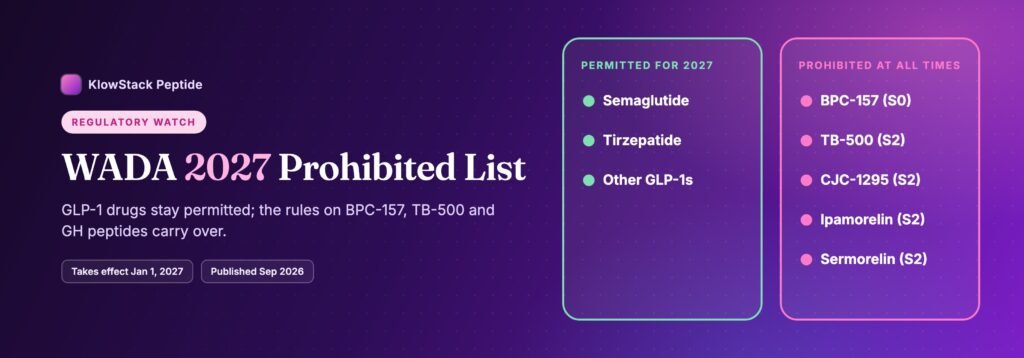
GLP-1 drugs: monitored, not banned
GLP-1 receptor agonists are among the most prescribed drugs in the US, used for type 2 diabetes and weight management. Because they change body weight, sport has asked whether they belong on the list. For 2027, WADA’s answer is no. According to reporting on the release, its expert advisory group reviewed the published literature and concluded there is currently insufficient evidence that these drugs meet the criteria for inclusion [2][3].
Those criteria come from the World Anti-Doping Code. A substance can be listed when it meets two of three tests: it has the potential to enhance performance, it poses a health risk to the athlete, or it violates the spirit of sport [1]. WADA continues to track GLP-1 drugs, and reporting on the release notes that two scientific studies are underway to gather more data [3].
What changed elsewhere on the list
- Cannabinoids (S8): wording revised to reflect current science on THC-like effects, with more examples.
- Glucocorticoids: vaginal administration added as a permitted route.
- Beta-blockers (P1): sport-by-sport details harmonized across international federations.
- Monitoring Program: several substances removed after data showed they no longer raise an anti-doping concern [2][3].
Where the peptides on this site stand
None of the published summaries of 2027 modifications mentions a change to the peptide categories [2][3], so the existing listings carry over:
| Compound | WADA class | Status |
|---|---|---|
| BPC-157 | S0, Non-approved substances (named example since the 2022 List) | Prohibited at all times |
| TB-500 (thymosin beta-4 and its derivatives) | S2, Peptide hormones, growth factors and related substances | Prohibited at all times |
| CJC-1295, sermorelin (GHRH analogs) | S2, Growth hormone–releasing factors | Prohibited at all times |
| Ipamorelin (ghrelin-receptor agonist) | S2, Growth hormone–releasing factors | Prohibited at all times |
| Semaglutide, tirzepatide (GLP-1 receptor agonists) | Not listed | Permitted for 2027 |
The S0 class works as a catch-all: any pharmacological substance not approved for human therapeutic use by a government health authority is prohibited, whether or not it is named. That is why compounds still in the research stage fall under it automatically.
For the research background on two of these compounds, see BPC-157 vs TB-500.
Athletes subject to testing should check the official 2027 List and their national anti-doping organization before taking any substance. This article is for education only.
Sources
- WADA, The Prohibited List (official list, criteria and annual documents). https://www.wada-ama.org/en/prohibited-list
- Sport Resolutions, “WADA publishes 2027 Prohibited List.” https://www.sportresolutions.com/news/wada-publishes-2027-prohibited-list
- Athletics Illustrated, “WADA’s 2027 anti-doping list published.” https://athleticsillustrated.com/world-anti-doping-agency-published-its-2027-list-of-banned-substances-and-methods/