
Peptide science,
made clear.
Independent guides, honest comparisons, and plain-English research summaries — every claim tied to a published study.
New here? Start with what the KLOW peptide stack is →
- Peer-reviewed sources
- 100% independent
- Updated weekly
Every claim is tied to a published, citable study. Read our editorial policy →
Start here
Three ways in
Whether you want the deep science, a head-to-head, or the latest news — pick your lane.
Compound guides
Full research write-ups on each compound — mechanisms, evidence, dosing context, and safety.
Browse guides →Comparisons
Honest, side-by-side breakdowns — composition, mechanisms, and how researchers actually choose.
See comparisons →News & updates
FDA actions, clinical-trial results, and industry news — explained without the hype.
Read the latest →Find your peptide
Which peptide fits what you're looking for?
Answer a few quick questions and we'll email you a custom report: the peptides that match your criteria, and the guides to go with each one.
Encyclopedia
The compound library
The most-researched peptides — what they are, and where the evidence stands.
BPC-157
Body Protection Compound-157
Synthetic gastric peptide studied for tissue repair, wound healing, and recovery.
TB-500
Thymosin Beta-4 fragment
Studied for cell migration, wound healing, joint mobility, and inflammation.
GHK-Cu
Copper tripeptide-1
Naturally occurring copper peptide studied for collagen, skin, and regeneration.
Sermorelin
GHRH analog
Growth-hormone-releasing analog studied in the context of aging and body composition.
Semaglutide
GLP-1 receptor agonist
Well-studied GLP-1 medication with strong clinical evidence for metabolic outcomes.
KPV
Lys-Pro-Val tripeptide
Alpha-MSH-derived fragment studied for its anti-inflammatory properties.
Featured comparison
BPC-157 vs TB-500: the honest breakdown
They share most of their profile and get "stacked" constantly — but they aren't the same. See what actually separates them.
Read the comparison →Latest
Fresh guides & analysis
In-depth, sourced articles to understand peptides safely.
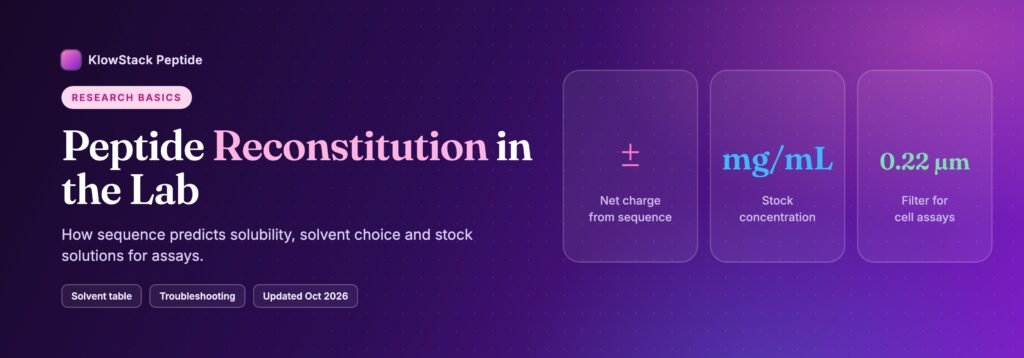
Peptide Reconstitution in the Lab: Solubility, Solvents and Handling
Peptide reconstitution in the lab: how sequence predicts solubility, choosing a solvent, gentle mixing, stock concentration, storage and troubleshooting.
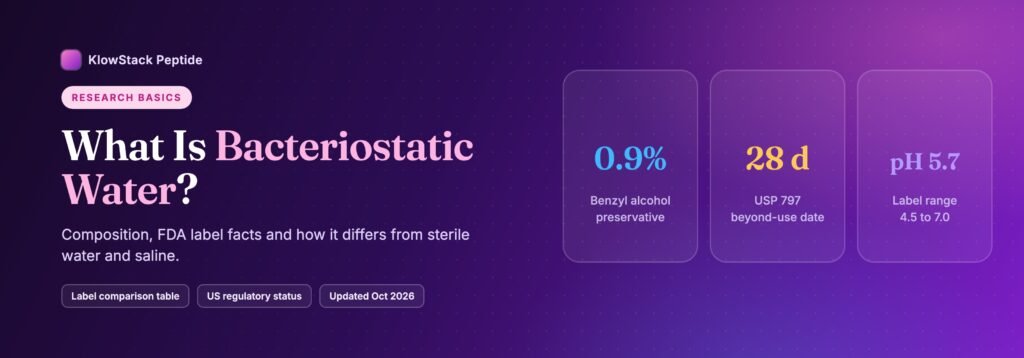
What Is Bacteriostatic Water? Composition, Labeling and Lab Use
What bacteriostatic water is: sterile water with benzyl alcohol, how it differs from sterile water and saline, what its FDA label says,…
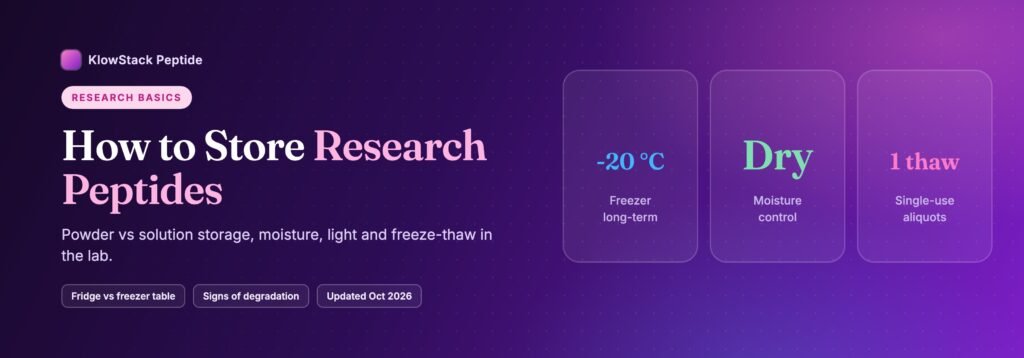
How to Store Research Peptides: Lyophilized Powder and Solutions
How to store research peptides: lyophilized vs solution storage, fridge vs freezer, moisture, light and freeze-thaw, plus signs a lab sample has…
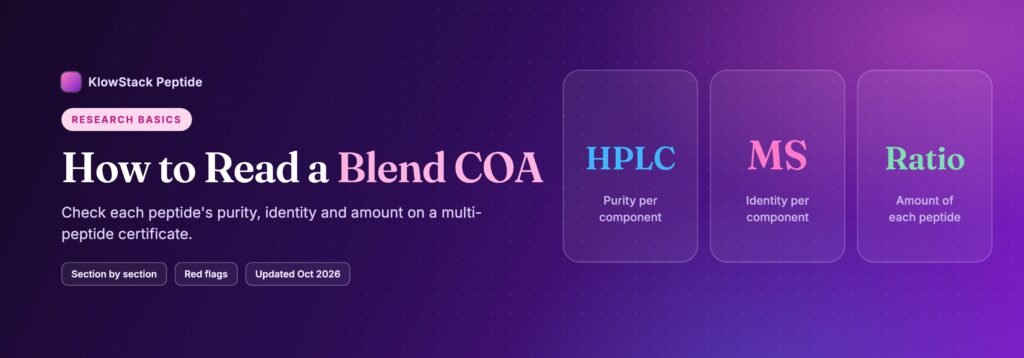
How to Read a Peptide Blend COA (Multi-Peptide Certificates)
How to read a peptide blend COA: check each peptide's purity and identity, the blend ratio, net content, batch number and red…
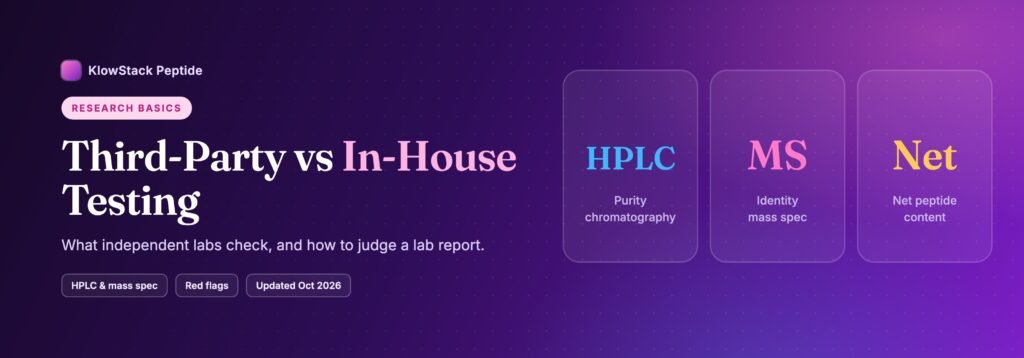
Third-Party vs In-House Peptide Testing: What’s the Difference?
What third-party peptide testing means, how it differs from in-house testing, what HPLC and mass spec check, and how to judge a…
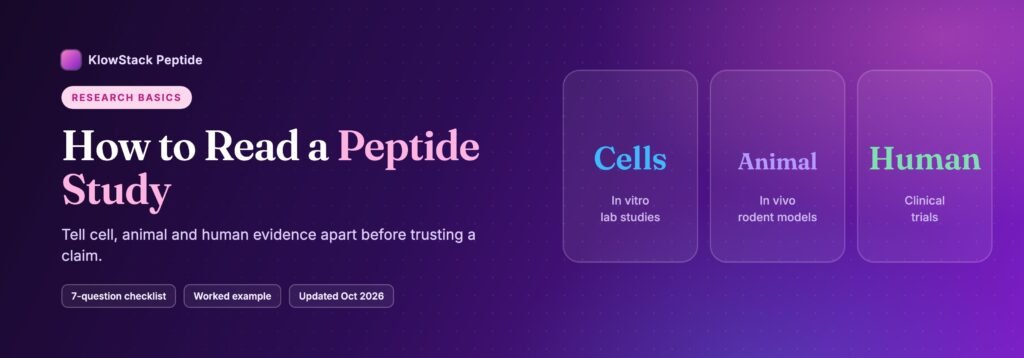
How to Read a Peptide Research Study (Animal vs Human)
How to read a peptide research study: tell cell, animal and human evidence apart, check sample size, endpoints and funding, and spot…
Stay on the cutting edge of peptide research
Every week: a curated selection of the latest studies, new comparisons, and practical guides. Free, no spam, unsubscribe anytime.
Free · Research summaries only · Unsubscribe anytime