
Research Guide
Start Here: Peptide Basics
New to peptides? What they are, where US law stands, and how to check a lab report.
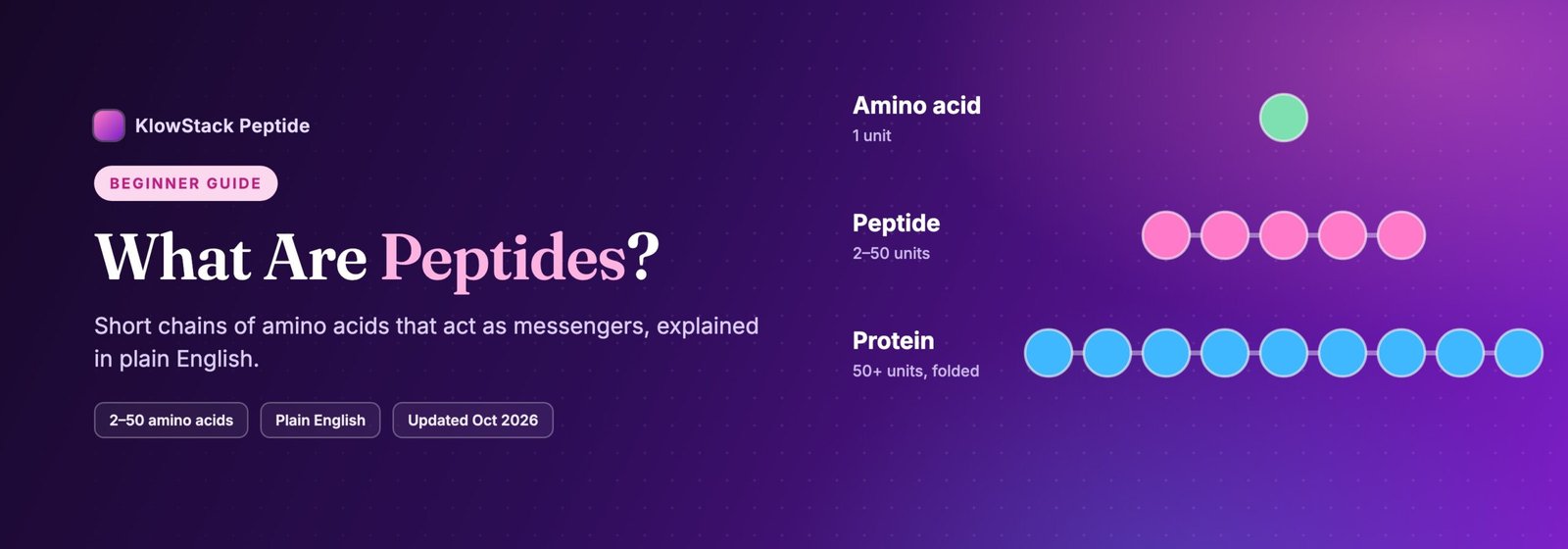
What Are Peptides? A Plain-English Guide
Peptides are short chains of amino acids that act as messengers in the body. Learn how they work, common types, and how they differ from proteins.
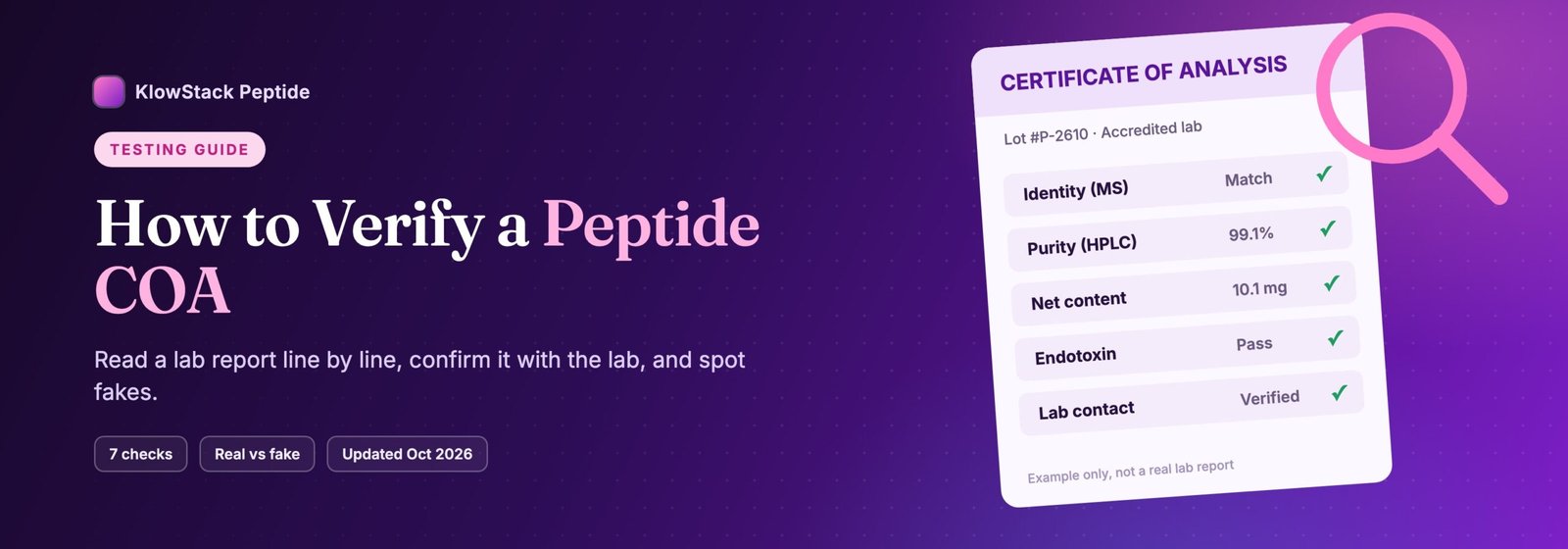
How to Verify a Peptide COA (Real or Fake)
Learn how to read a peptide COA line by line, check it with the testing lab, and spot fake or edited reports. Includes a real-vs-fake checklist.
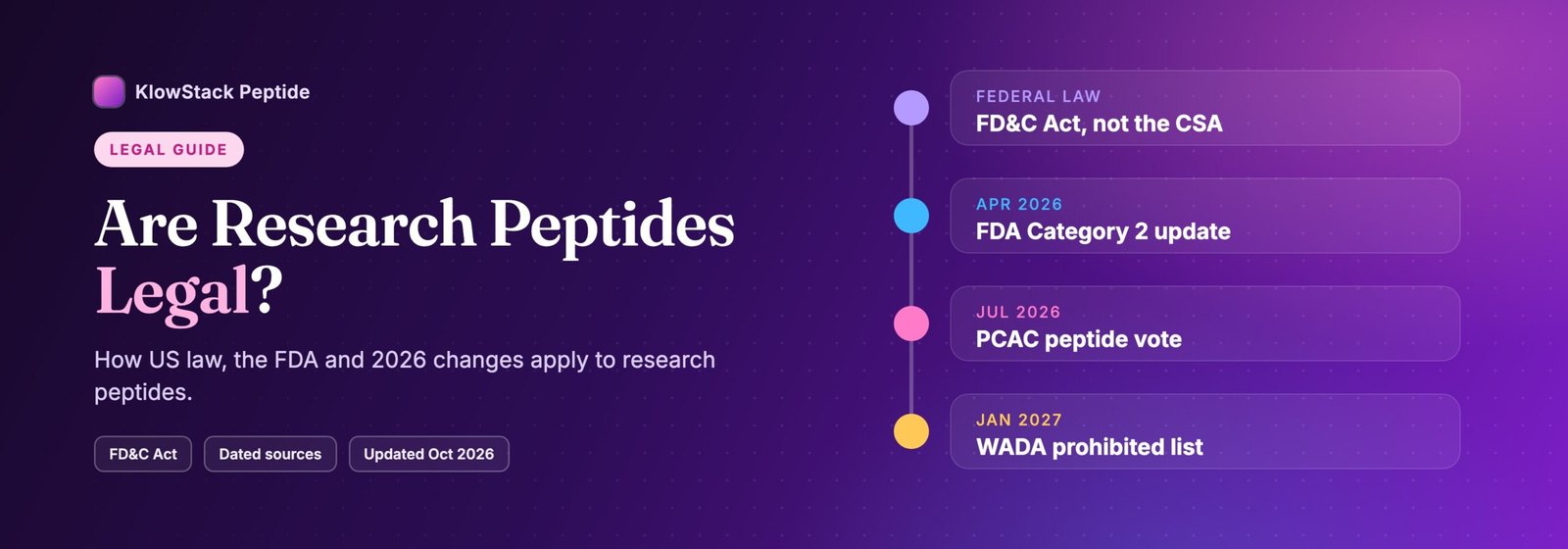
Are Research Peptides Legal in the US? (2026 Update)
Are research peptides legal to buy in the US? How federal law, the FDA’s 503A list and 2026 changes apply to buyers, sellers and athletes.
The KLOW Stack
What KLOW is, what the research shows, its risks, legal status, formats, storage, reviews and how to vet a supplier.
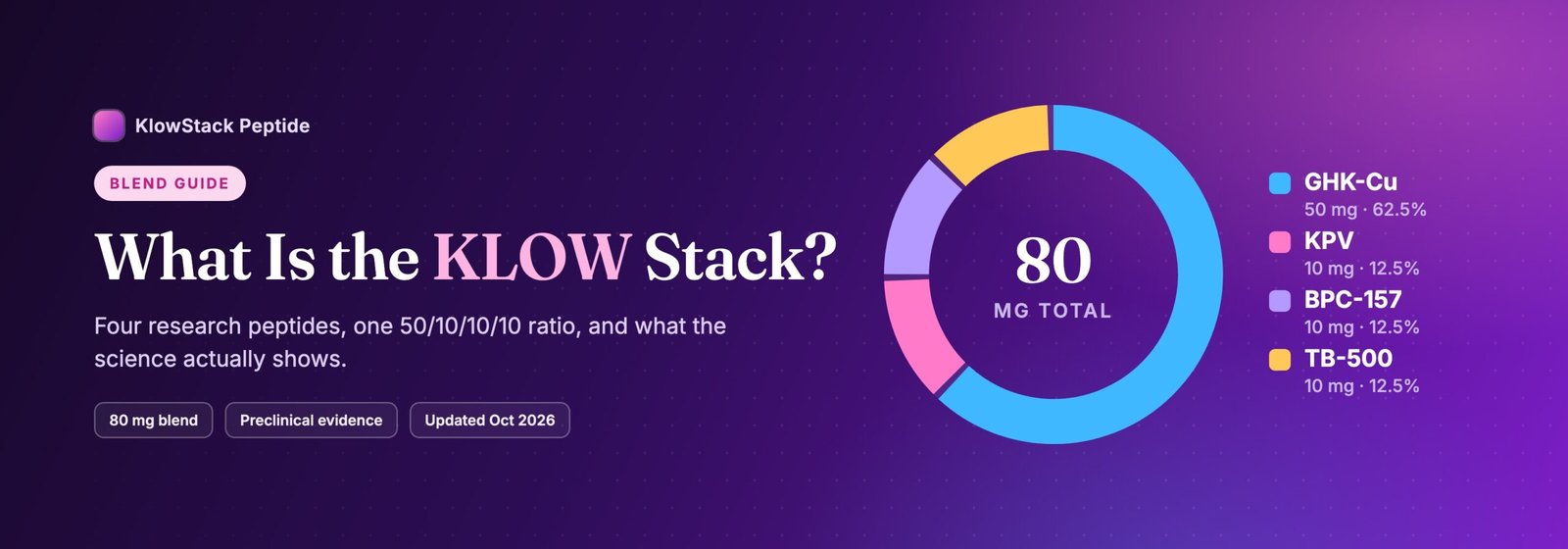
What Is the KLOW Stack? Composition, Ratio & What the Research Shows
KLOW pairs GHK-Cu, KPV, BPC-157 and TB-500, sold as a stack of separate vials or a premixed blend. See the 50/10/10/10 ratio, evidence and 2026 legal status.
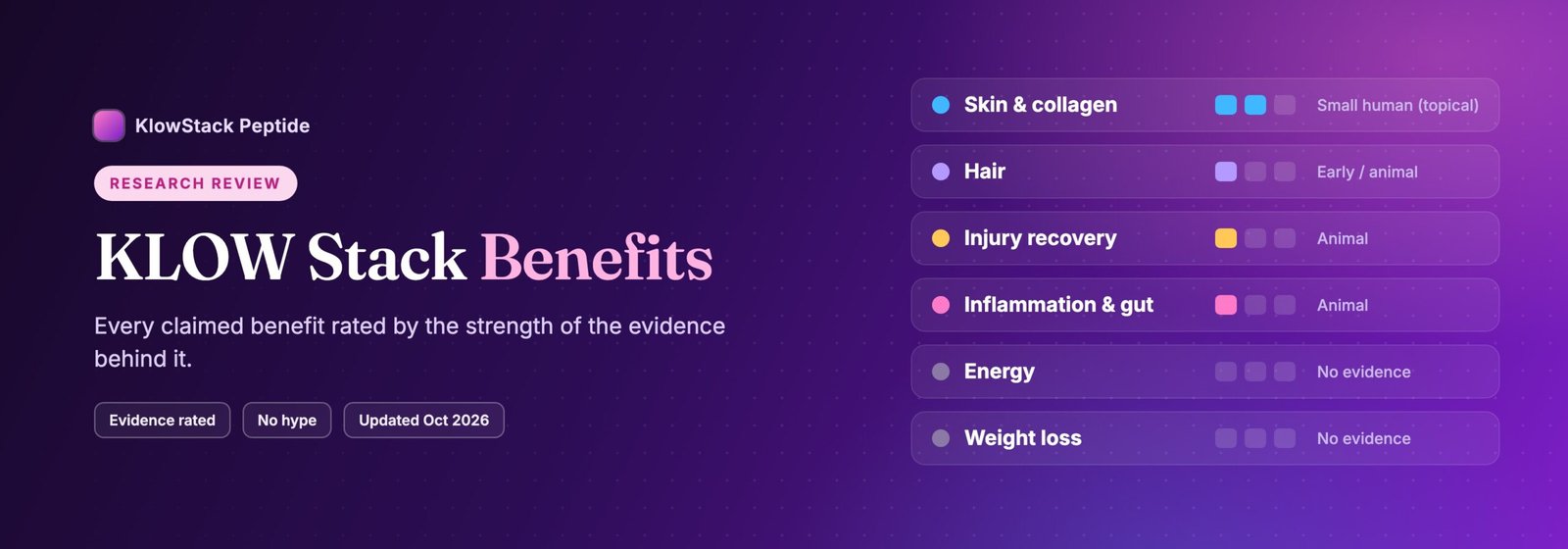
KLOW Stack Benefits: What the Research Shows
KLOW is marketed for skin, hair, recovery and inflammation. See each claimed benefit rated by evidence, what users report, realistic timelines and what’s unproven.
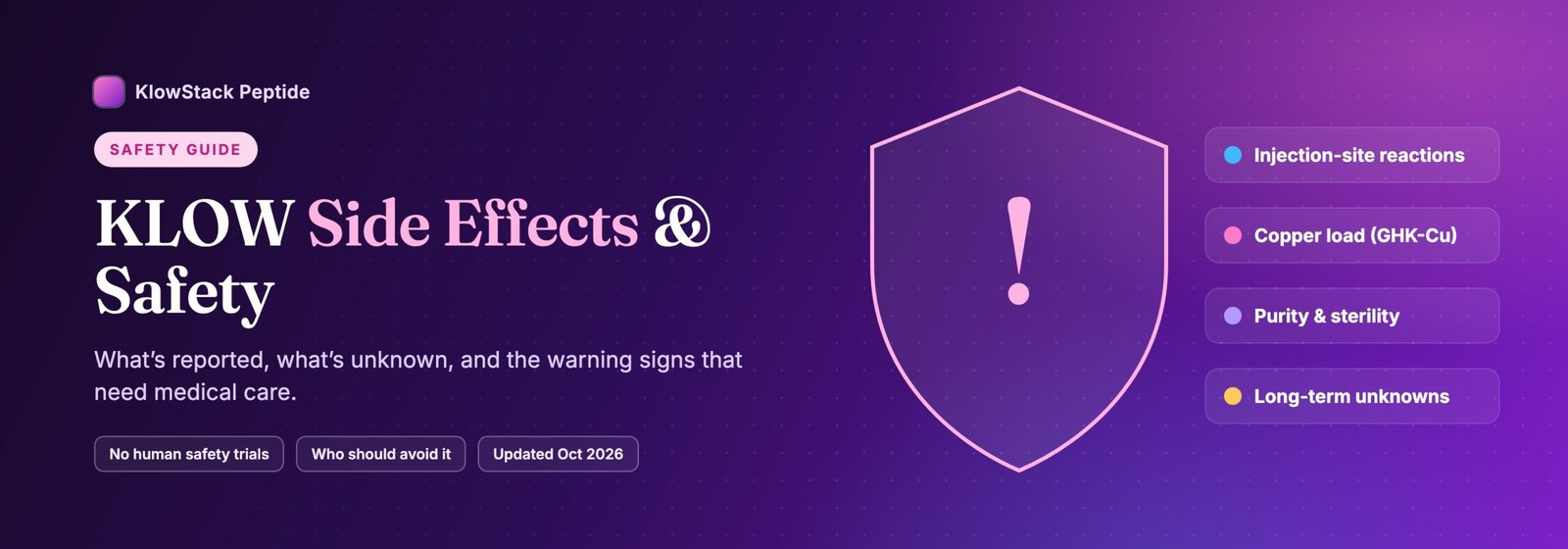
KLOW Side Effects and Safety: What’s Known and What Isn’t
Reported KLOW side effects range from injection-site reactions to fatigue. See each ingredient’s risks, product-quality dangers, who should avoid it and the warning signs.
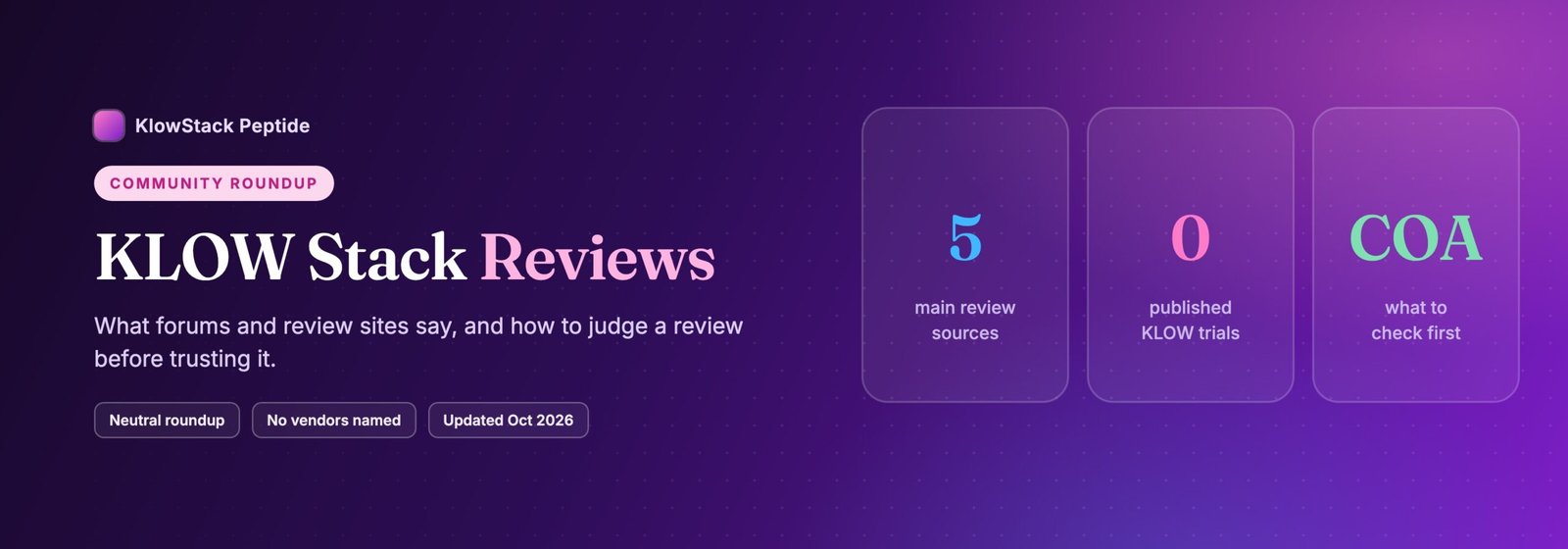
KLOW Stack Reviews: What Researchers and Forums Say
A neutral roundup of KLOW stack reviews from Reddit, Trustpilot and forums, what each component’s research shows, and how to judge a review. Research use only.
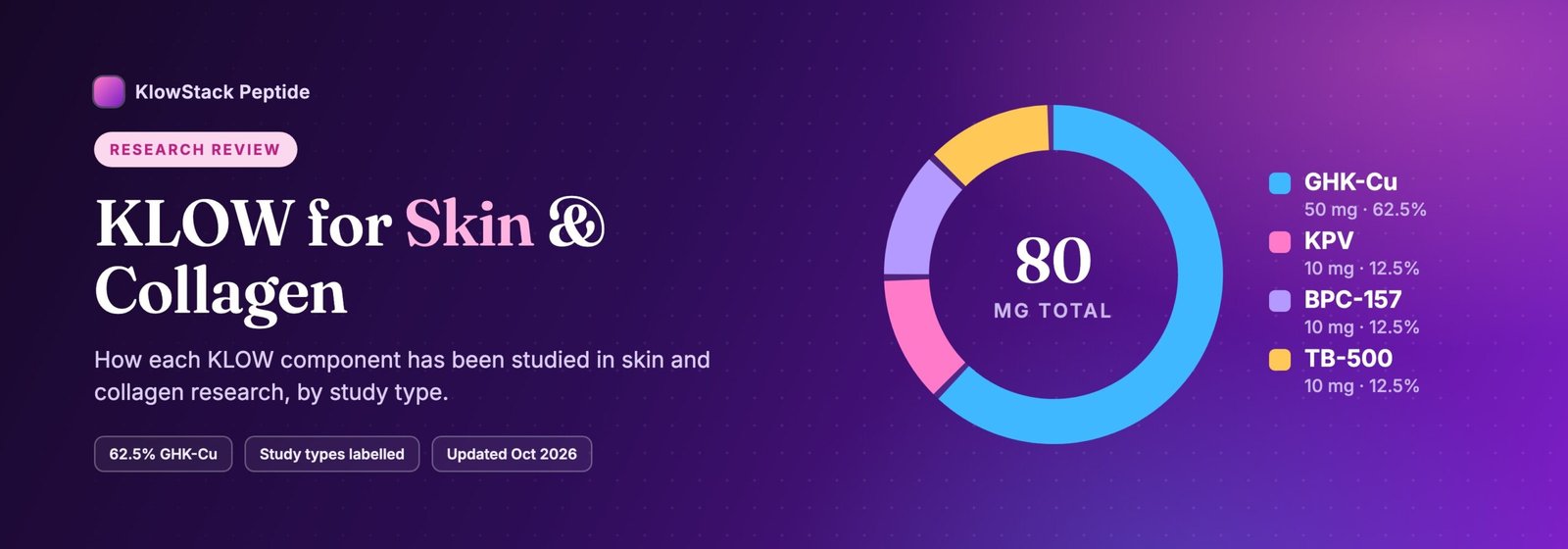
KLOW for Skin & Collagen Research: What the Studies Show
How each KLOW component (GHK-Cu, BPC-157, TB-500, KPV) has been studied in skin and collagen research, by study type, and what’s still unknown. Research use only.
KLOW for Gut & Inflammation Research: The KPV Angle
Why KPV makes KLOW interesting to gut researchers, what colitis and inflammation studies show for each component, and what’s still unknown. Research use only.
KLOW for Injury Research: What Studies Show on Tendon and Tissue Recovery
What preclinical research on GHK-Cu, BPC-157, TB-500 and KPV shows about tendon, muscle and tissue recovery, with each study type labelled. Research use only.
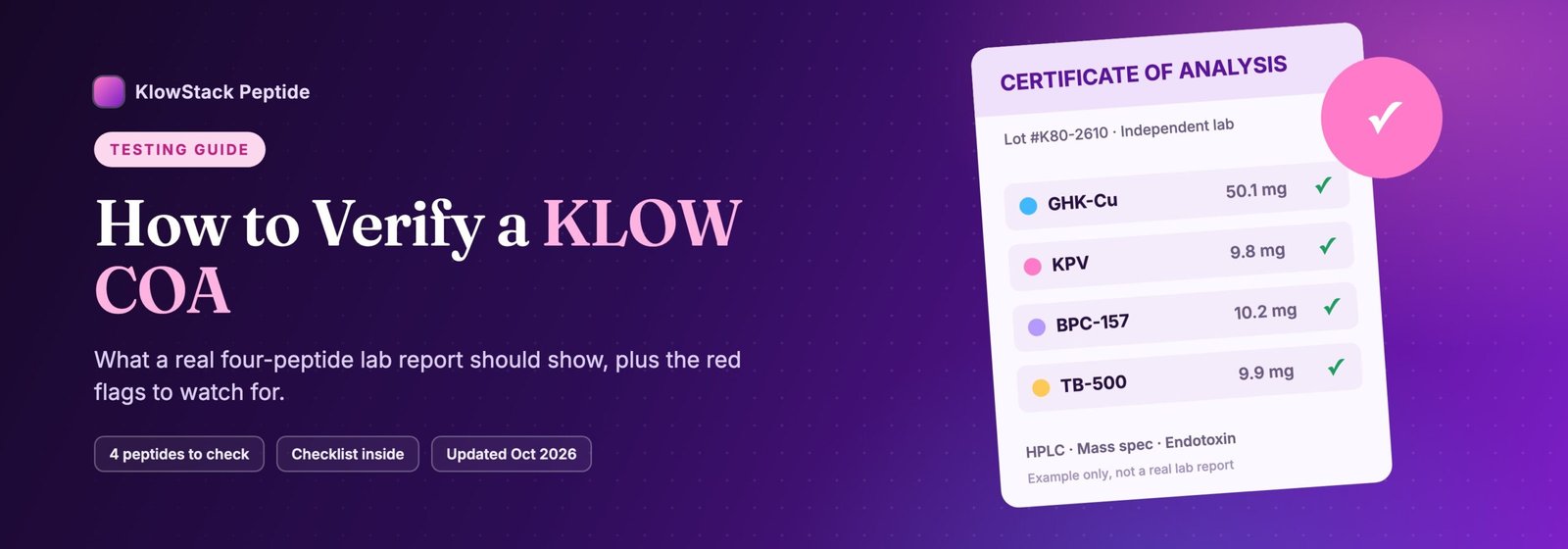
How to Verify a KLOW COA: Testing a 4-Peptide Blend
A real KLOW COA should test all 4 peptides for identity and amount, not just give one purity number. Use our checklist, expected values and red flags to verify it.
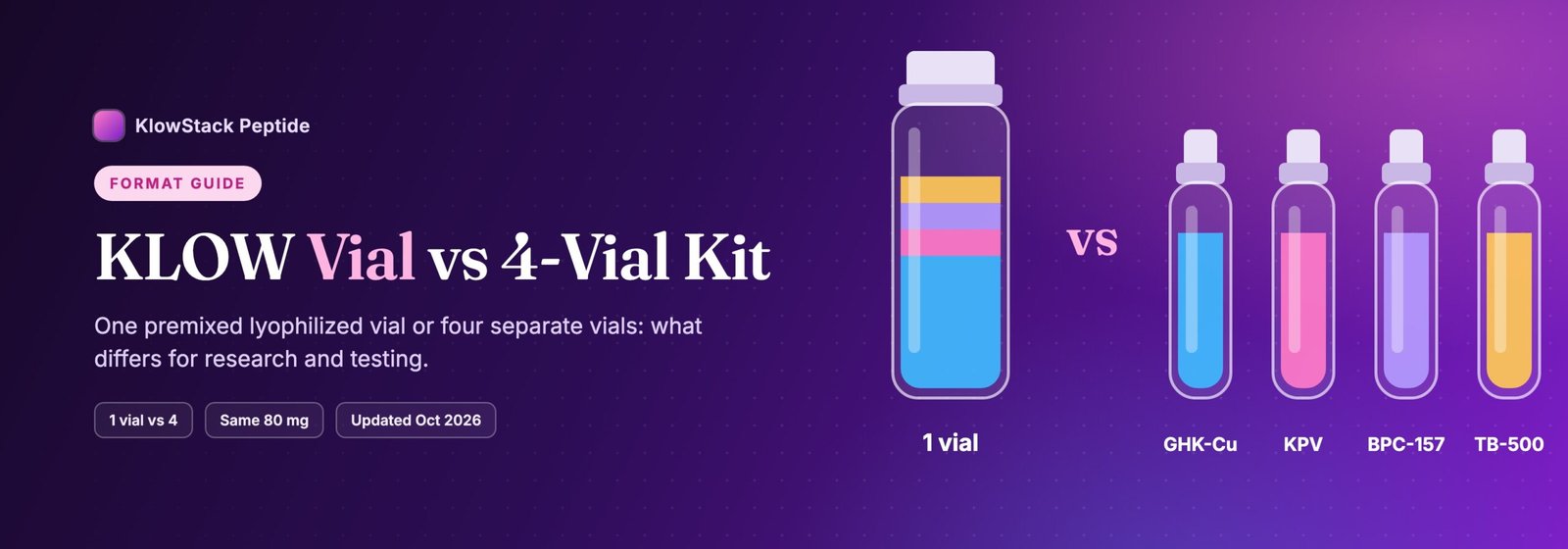
KLOW Vial vs 4-Vial Kit: Which Format Fits Your Research?
What’s inside an 80 mg KLOW vial, how it differs from a 4-vial kit, and lyophilized vs pre-mixed formats. Research-use-only spec guide with a COA checklist.
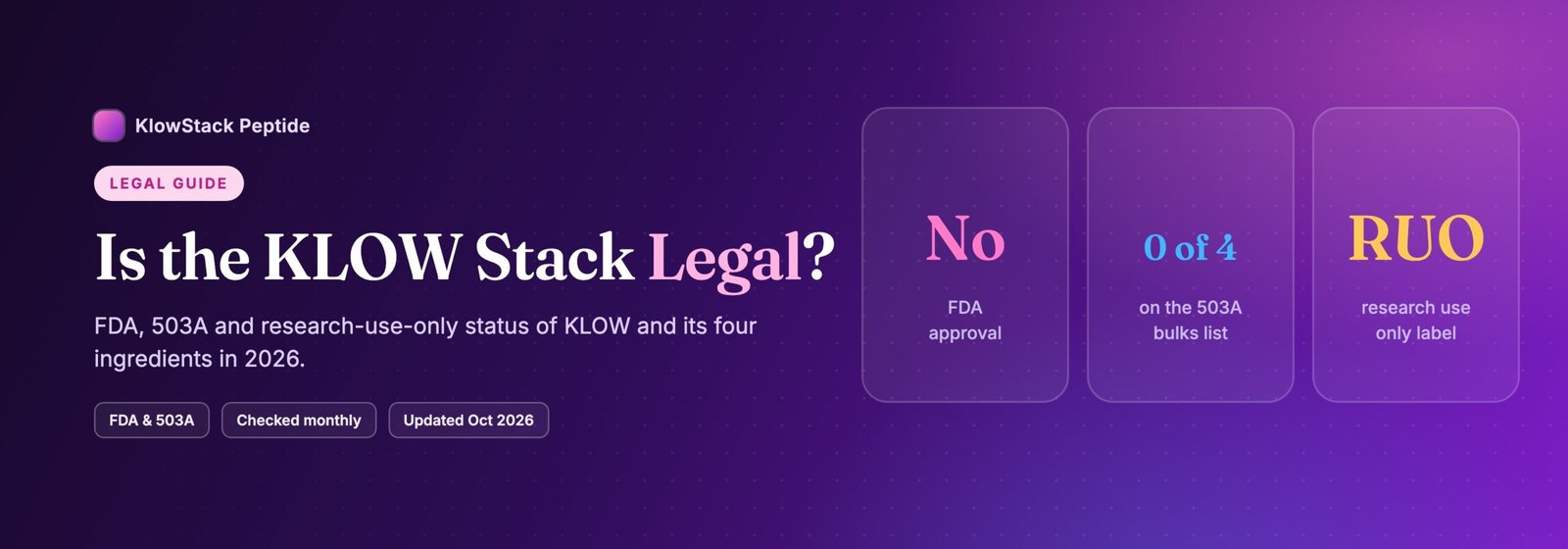
Is the KLOW Stack Legal? FDA and 503A Status Explained
KLOW’s US legal status explained: FDA approval, 503A Category 1 vs 2 for GHK-Cu, BPC-157, TB-500 and KPV, and research-use-only rules. Updated October 2026.
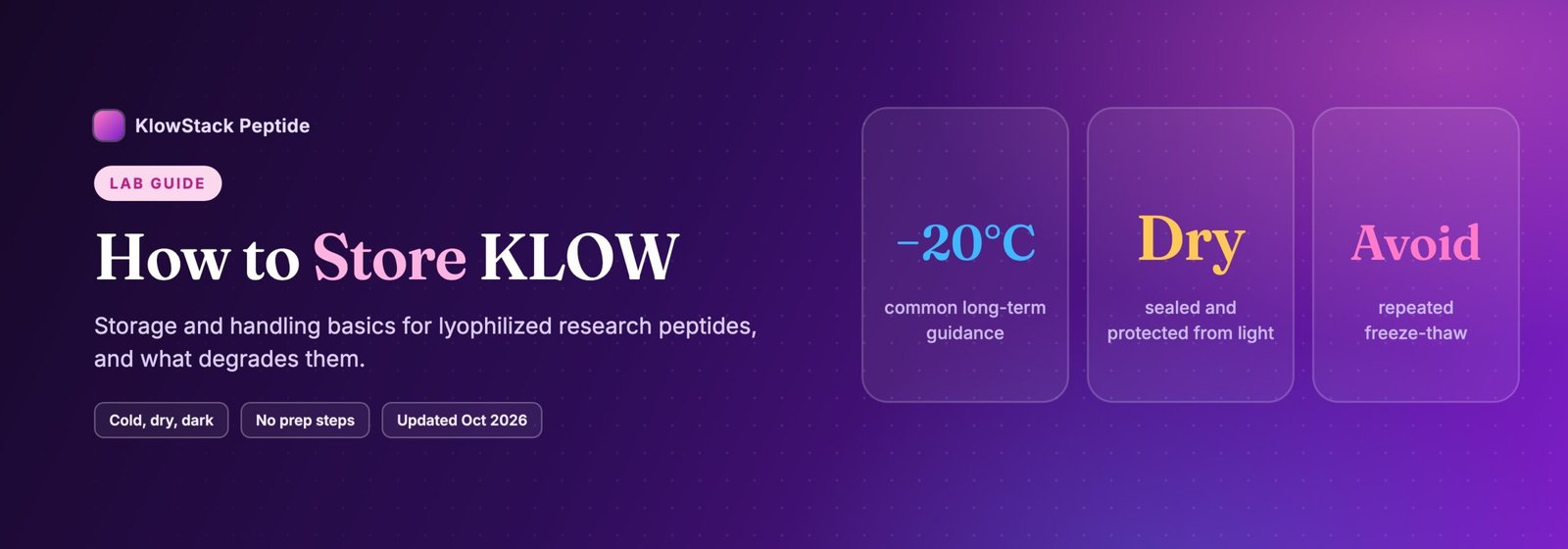
How to Store KLOW: Storage & Handling for Researchers
Lab storage guidance for lyophilized KLOW: temperature, light, moisture and freeze-thaw, with a sourced stability table. Research use only, not for humans.
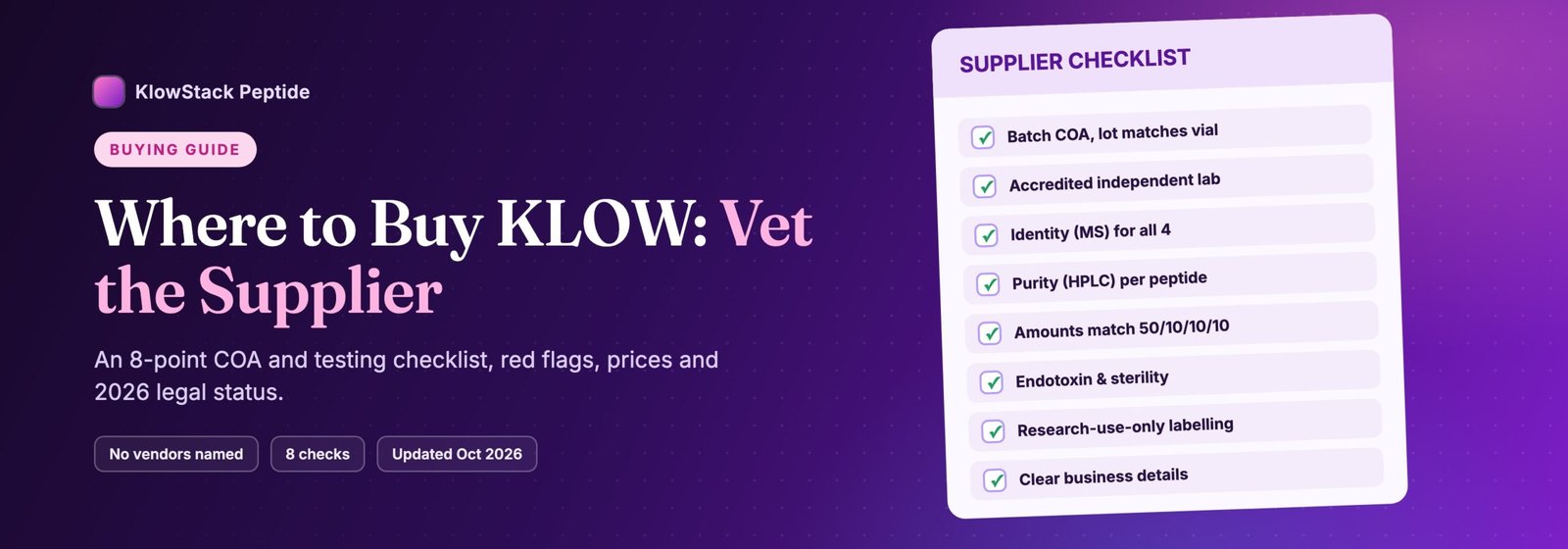
Where to Buy the KLOW Stack: How to Vet a Supplier Before You Trust a Vial
Where is KLOW sold, and how do you tell a careful supplier from a risky one? An 8-point COA and testing checklist, red flags, prices and 2026 legal status.
Peptide Blends
How Wolverine, GLOW and KLOW are built, what mixing peptides means, and what the GLOW and Wolverine research shows.
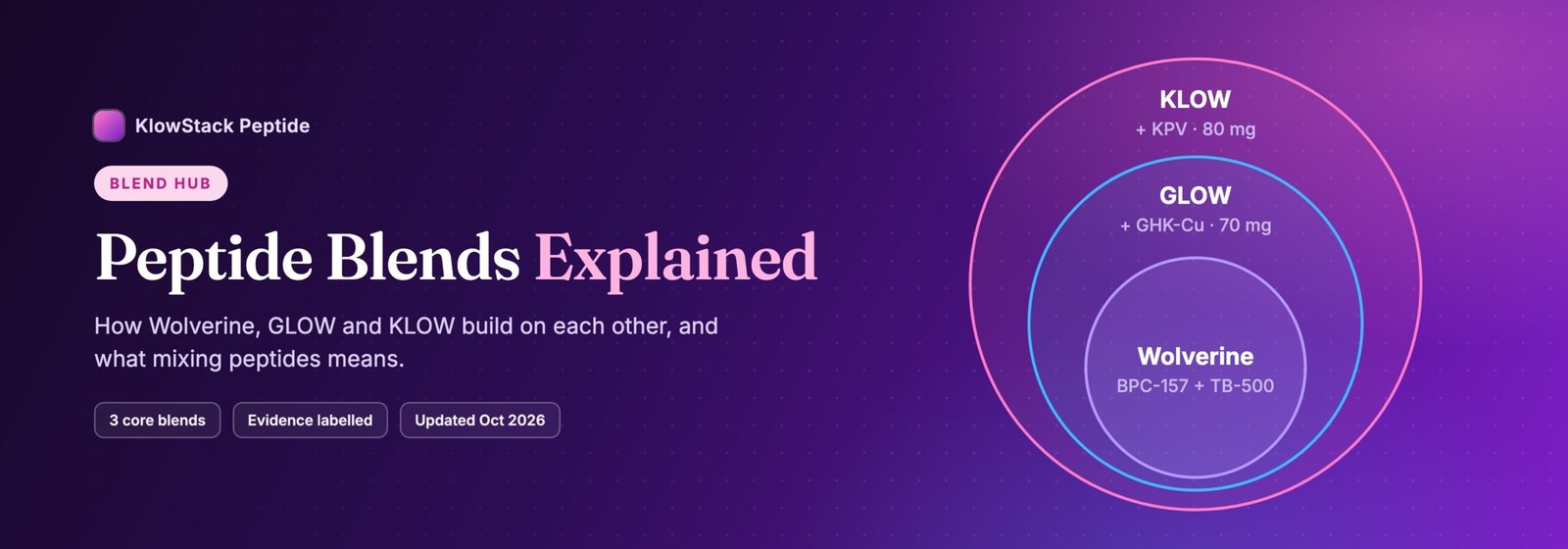
Peptide Blends Explained: KLOW, GLOW, Wolverine and Other Common Blends
What peptide blends are, how KLOW, GLOW and Wolverine compare, the most common blends, what the research shows, and how to check a blend’s COA.
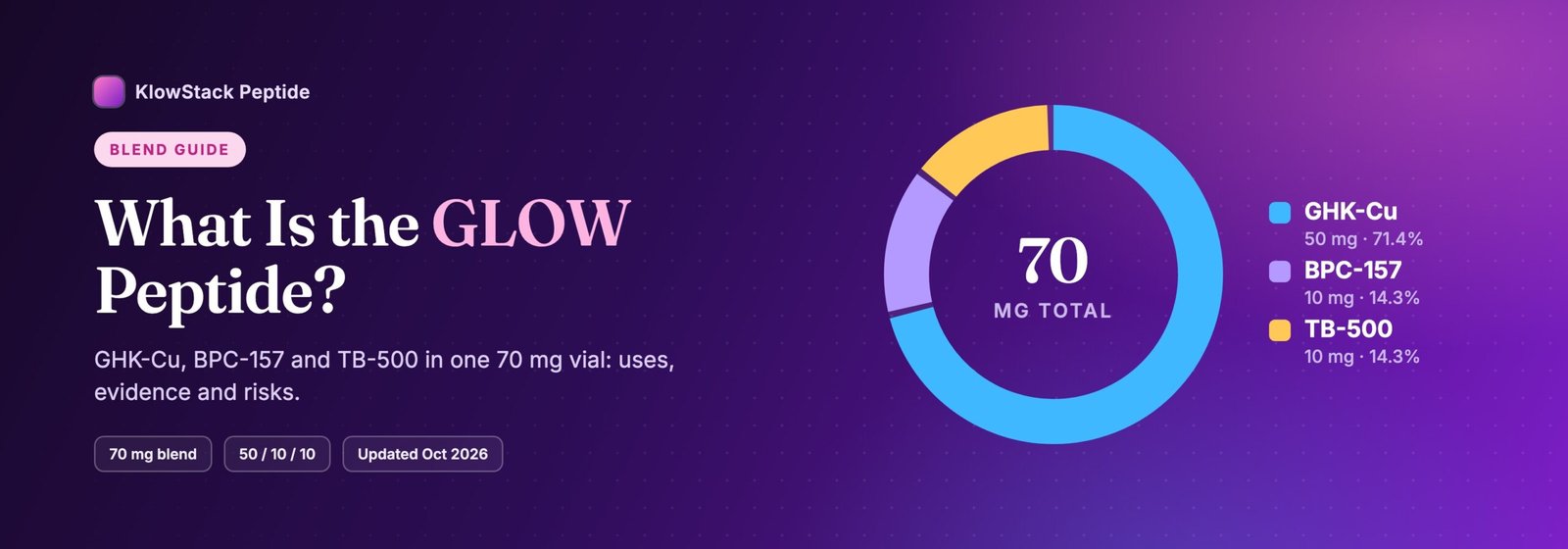
What Is the GLOW Peptide? The GHK-Cu, BPC-157 and TB-500 Blend Explained
GLOW is a 70 mg blend of GHK-Cu, BPC-157 and TB-500 sold for skin and recovery. See what’s in it, what the research shows, its risks, cost and legal status.
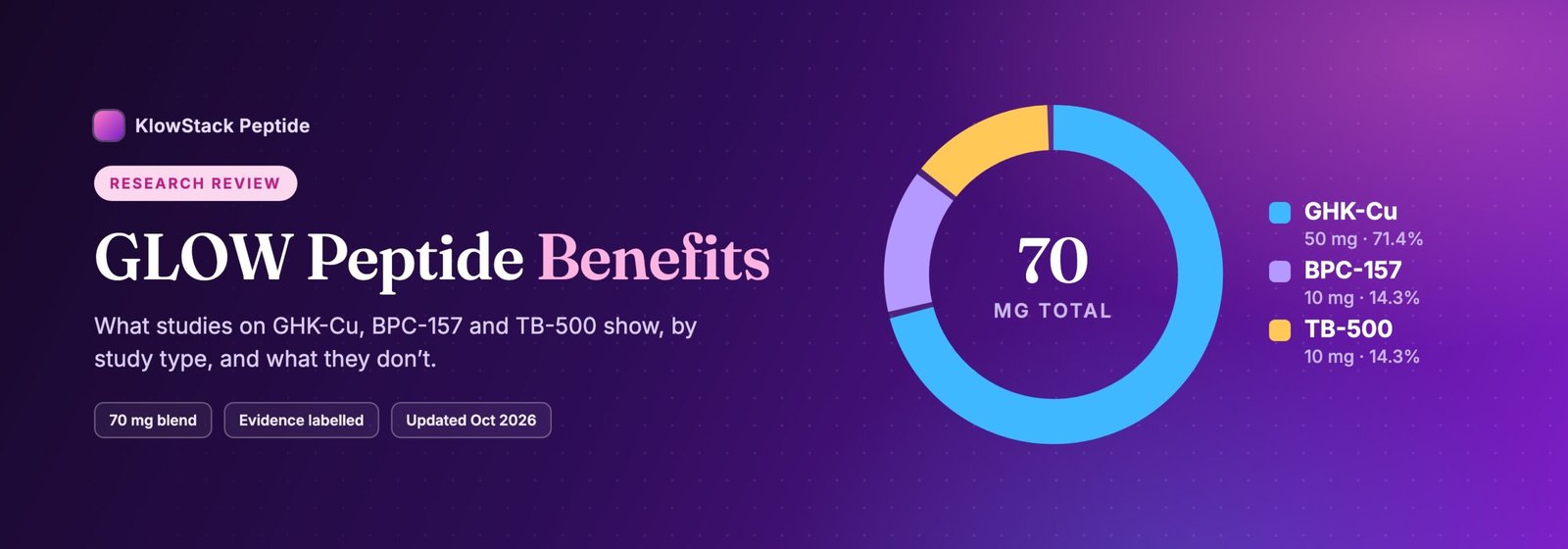
GLOW Peptide Benefits: What the Research Shows (and What It Doesn’t)
What studies on GHK-Cu, BPC-157 and TB-500 report, labelled by study type (in vitro, animal, human), and what’s untested about the GLOW blend. Research only.
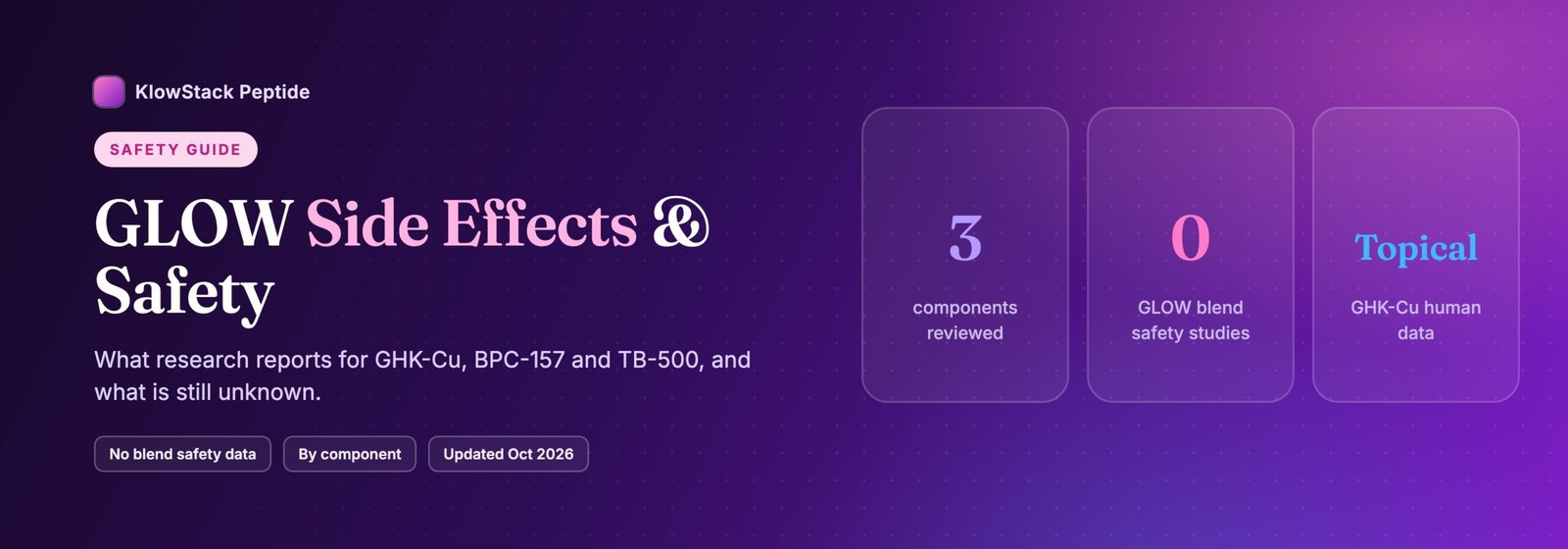
GLOW Peptide Side Effects: What Research Reports for Each Component
No safety studies exist for the GLOW blend itself. See what lab, animal and human topical research reports for GHK-Cu, BPC-157 and TB-500, and its limits.
GLOW Peptide for Skin & Hair: What the Research Shows by Component
Topical GHK-Cu, BPC-157 and TB-500 skin and hair research, sorted by study type. How the GLOW blend differs from copper peptide serums, and what isn’t known.
What Is the Wolverine Stack? BPC-157 and TB-500 Explained
The Wolverine stack pairs BPC-157 and TB-500 for injury recovery. See what’s in it, what the research shows (and doesn’t), risks, cost and 2026 legal status.
Wolverine Stack Benefits: What Tendon & Recovery Research Shows
What BPC-157 and TB-500 have been studied for in tendon, muscle and wound research, sorted by study type, plus why the stack itself has no human data.
Wolverine Stack Side Effects: What BPC-157 and TB-500 Research Reports
What adverse findings have BPC-157 and TB-500 studies reported? A compound-by-compound look by evidence type, plus purity and regulatory status.
Comparisons
Side-by-side breakdowns of ingredients, evidence, risks and cost.
KLOW vs GHK-Cu: How the Four-Peptide Blend Compares With Copper Peptide Alone
KLOW vs GHK-Cu compared: composition, mg per vial, research areas, study types, cost per mg and regulatory status. Includes a GLOW comparison. Research use only.
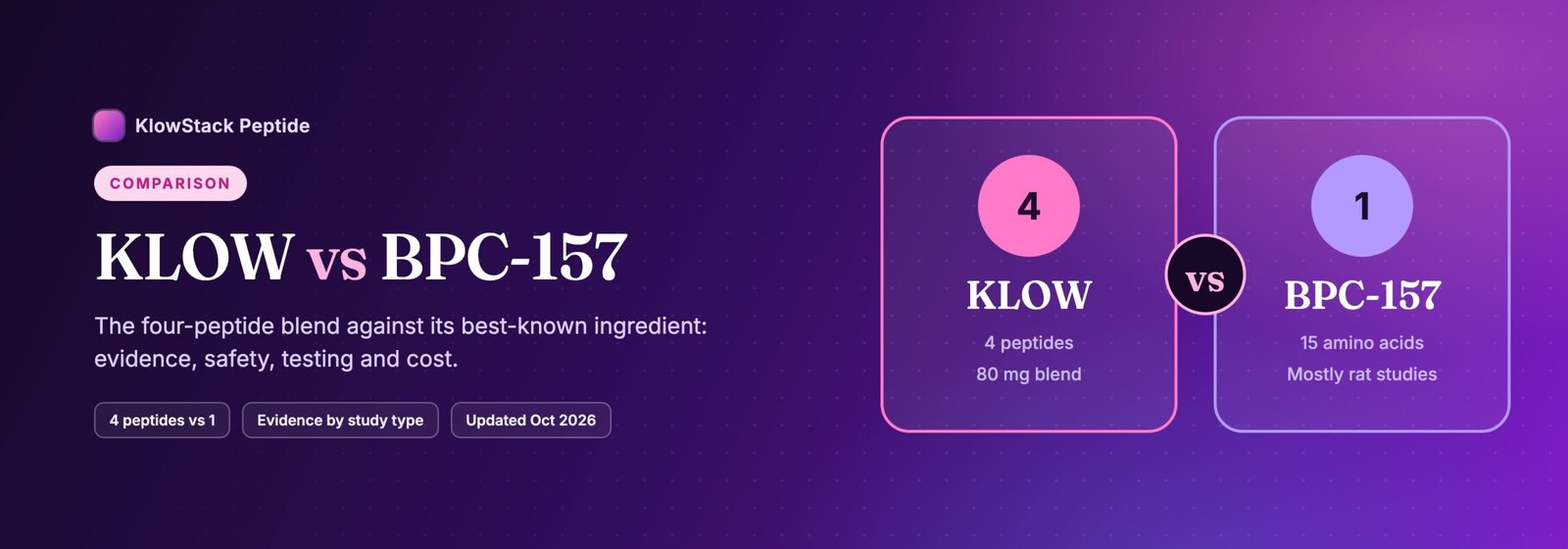
KLOW vs BPC-157 Alone: How the Blend Compares With Its Best-Known Ingredient
KLOW contains BPC-157 plus GHK-Cu, KPV and TB-500. Compare composition, evidence by study type, safety unknowns, cost per mg and legal status. Research use only.
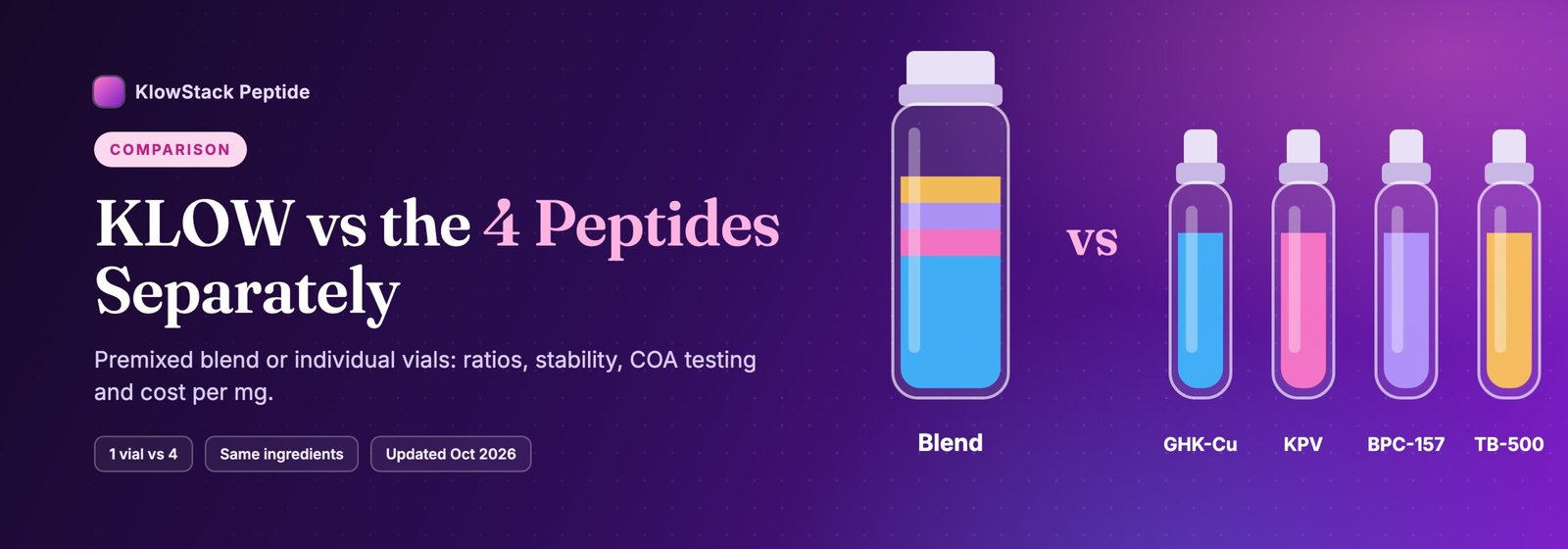
KLOW vs Buying the 4 Peptides Separately: Premixed Blend or Individual Vials?
KLOW comes premixed or as four separate peptides. Compare ratios, stability, COA testing, cost per mg and the evidence for each option. Research use only.
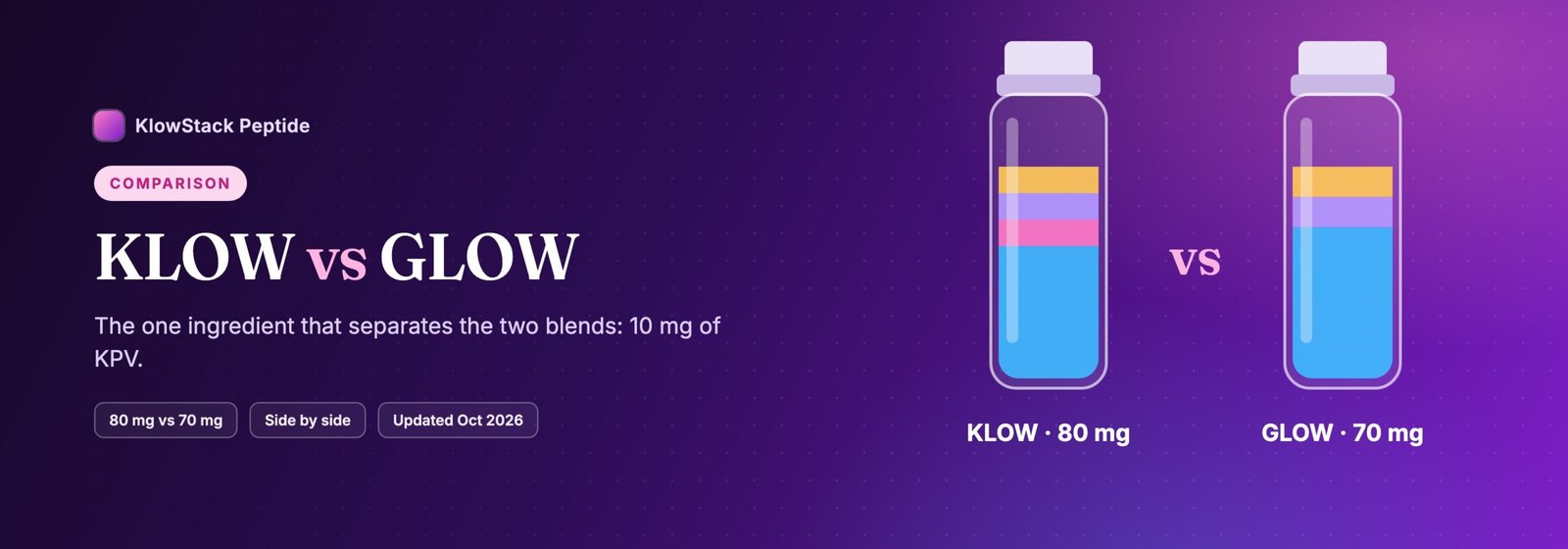
KLOW vs GLOW: What’s the Difference Between the Two Peptide Blends?
KLOW vs GLOW: both share GHK-Cu, BPC-157 and TB-500; KLOW adds 10 mg of KPV. Compare ratios, research, cost and side effects, and which fits your goal.
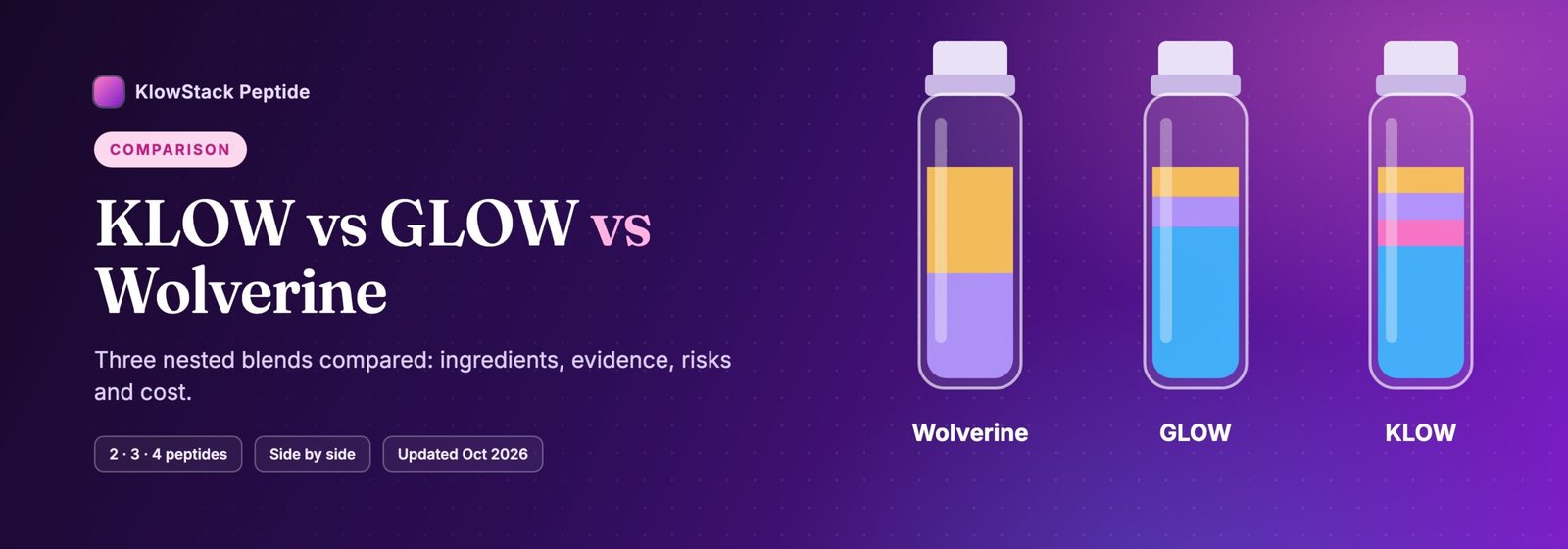
KLOW vs GLOW vs Wolverine: Which Blend Fits Which Research?
Wolverine is BPC-157 + TB-500, GLOW adds GHK-Cu, and KLOW adds KPV. Compare ingredients, research focus, evidence, risks and cost of all 3 blends side by side.
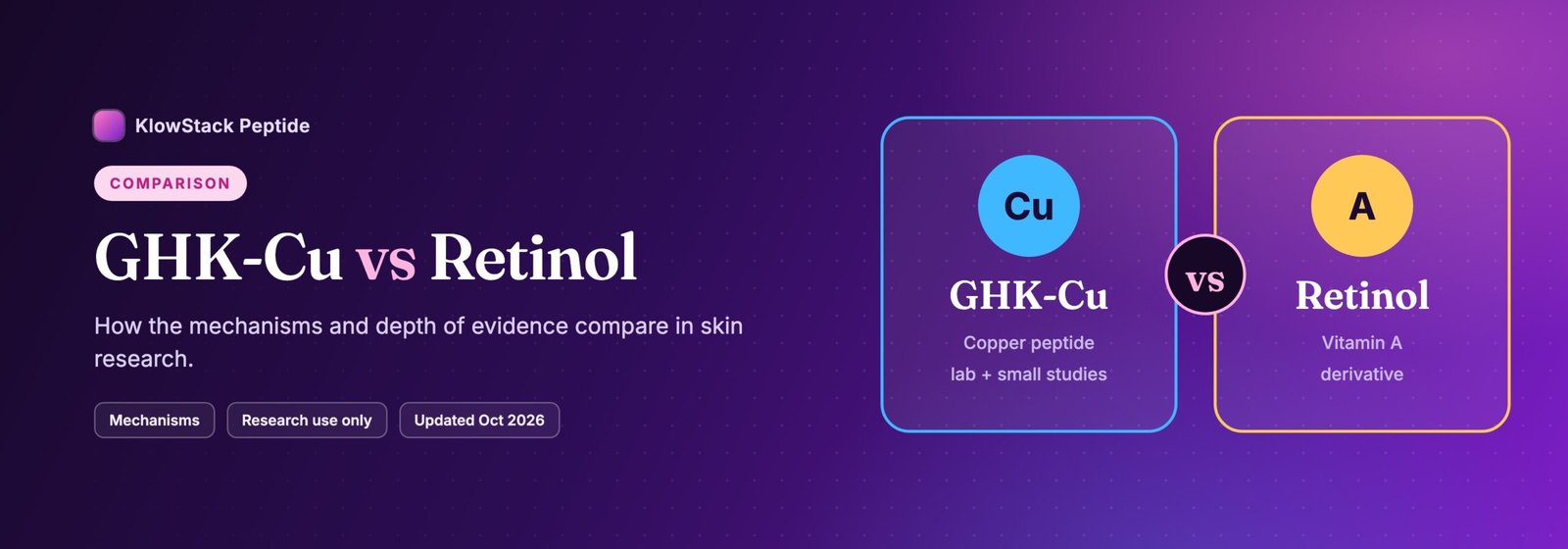
GHK-Cu vs Retinol: How the Mechanisms and Evidence Compare
GHK-Cu vs retinol and tretinoin: how each works in skin research, what study types back them and how deep the evidence goes. Research use only.
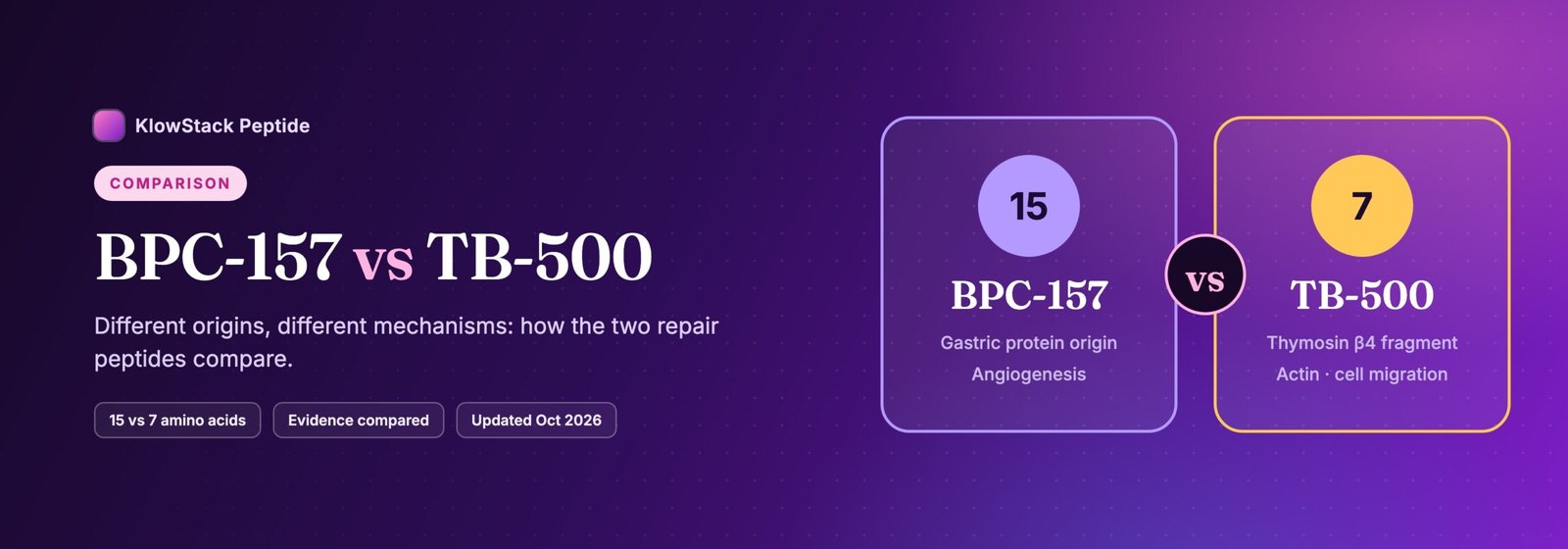
BPC-157 vs TB-500: What’s the Difference?
BPC-157 and TB-500 are both studied for tissue repair but work differently. Compare origin, mechanism, evidence, oral use, safety and 2026 legal status.
Compound Guides
One guide per compound: what it is, how it works, the human research, safety and 2026 legal status.
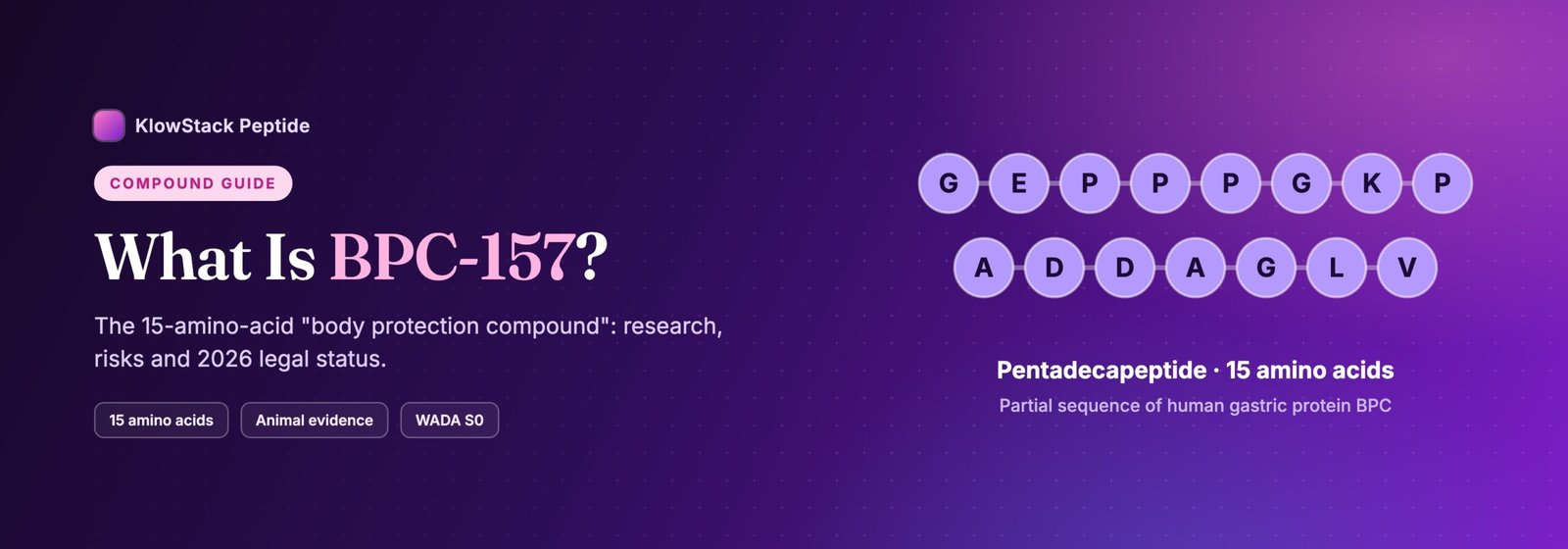
What Is BPC-157? The Body Protection Compound Explained
BPC-157 is a synthetic 15-amino-acid peptide from a gastric protein. See what the research shows, the 3 small human studies, side effects and 2026 FDA status.
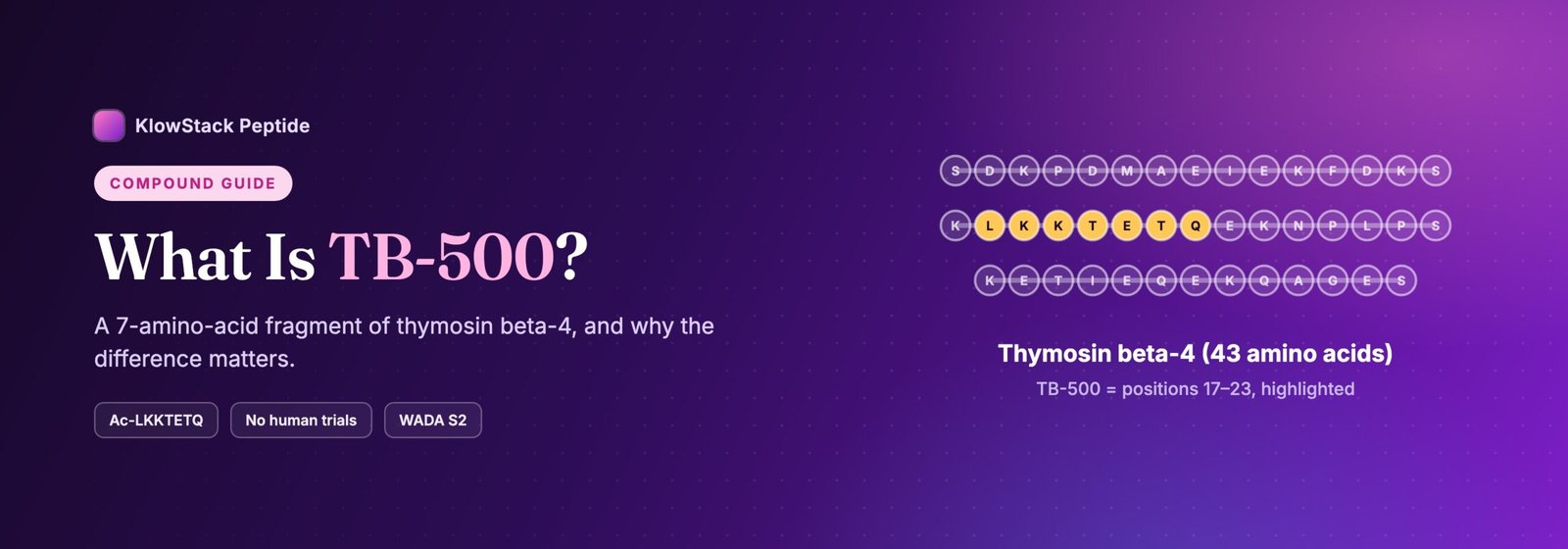
What Is TB-500? The Thymosin Beta-4 Peptide Explained
TB-500 is a lab-made fragment of thymosin beta-4 studied for tissue repair. Learn how it differs from TB4, what research shows, its risks and 2026 legal status.
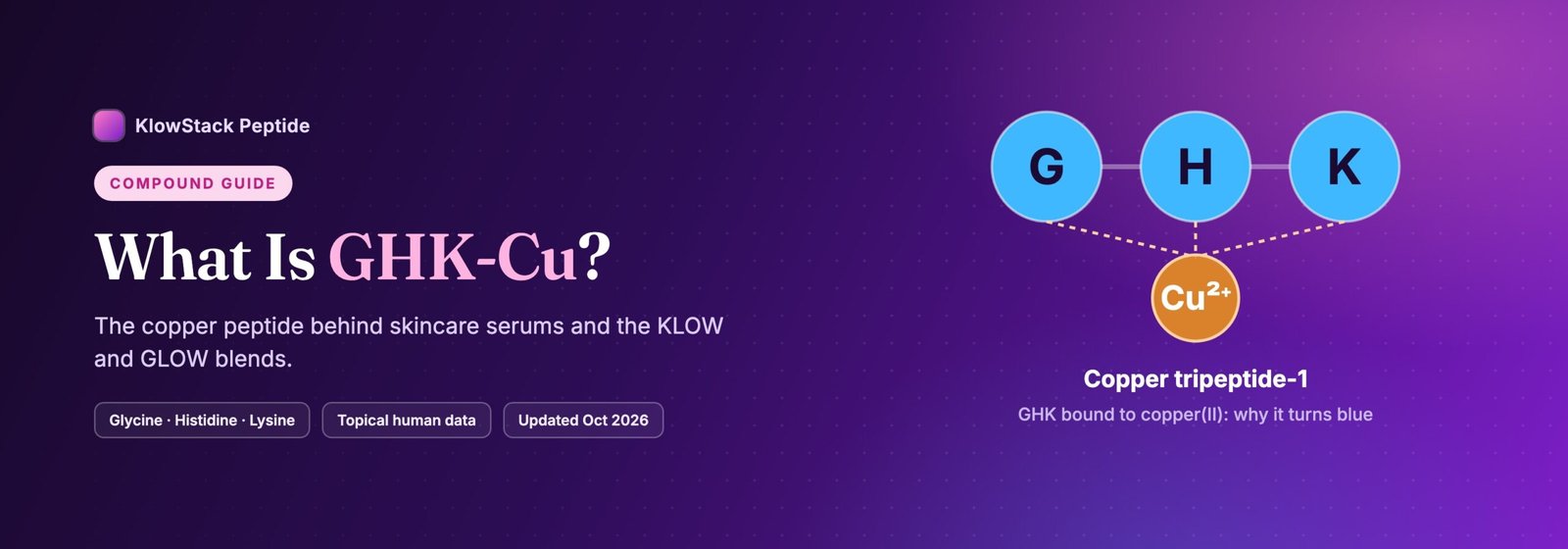
What Is GHK-Cu? The Copper Peptide Explained
GHK-Cu is a natural copper peptide studied for skin, hair and wound healing. See what the evidence shows for topical vs injected use, side effects and legality.
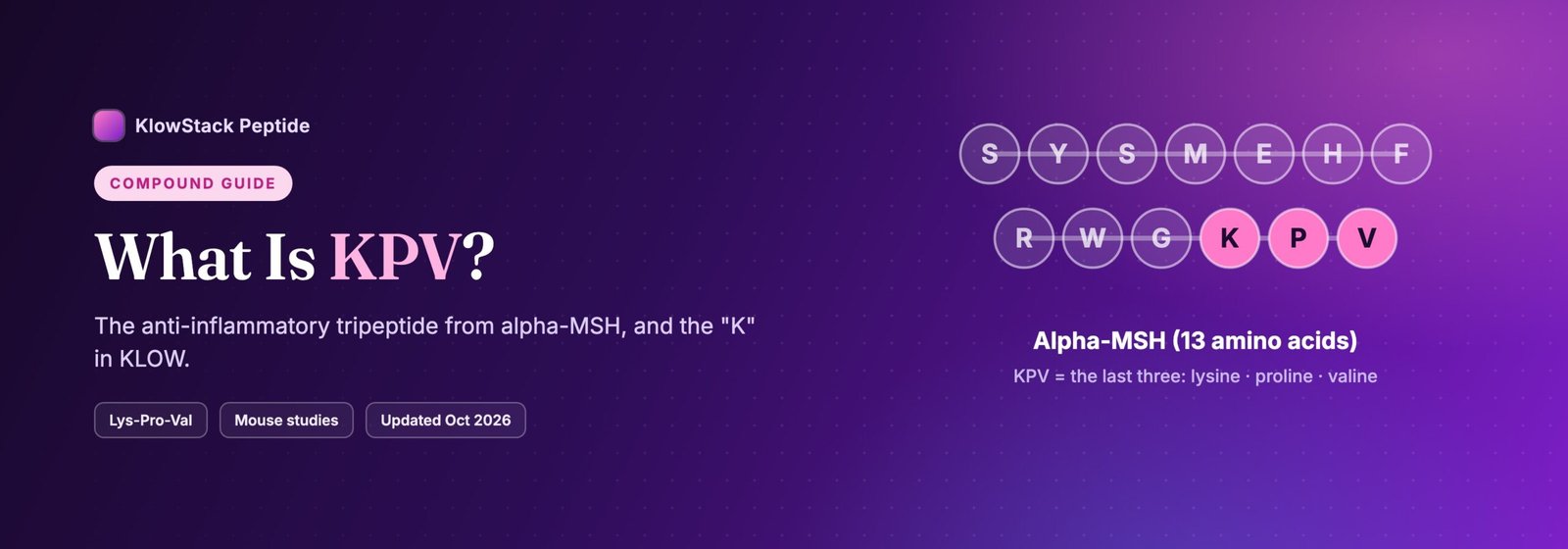
What Is KPV? The Anti-Inflammatory Tripeptide Explained
KPV is a 3-amino-acid peptide from alpha-MSH studied for gut and skin inflammation. See what the research shows, safety unknowns and its 2026 legal status.
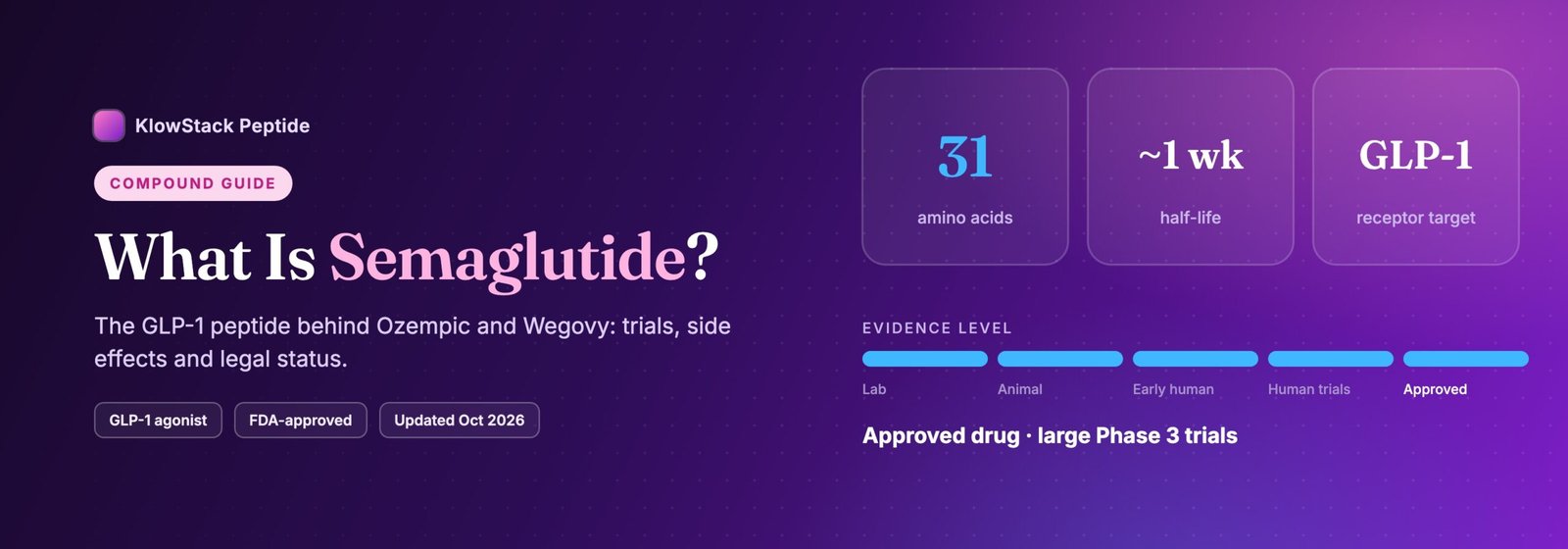
What Is Semaglutide? The GLP-1 Peptide Explained
Semaglutide is a GLP-1 peptide approved as Ozempic and Wegovy. See what the major trials show, side effects, compounding rules and 2026 legal status.
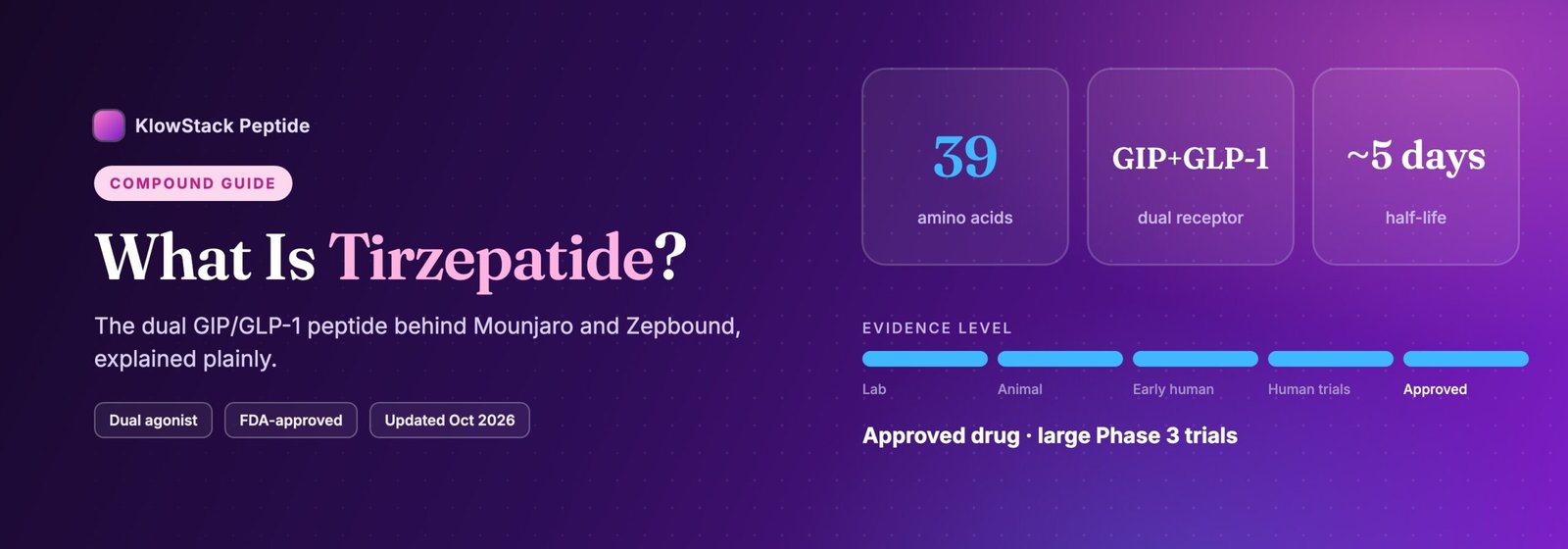
What Is Tirzepatide? The Dual GIP/GLP-1 Peptide Explained
Tirzepatide is a dual GIP/GLP-1 peptide approved as Mounjaro and Zepbound. See what major trials show, side effects, compounding and 2026 legal status.
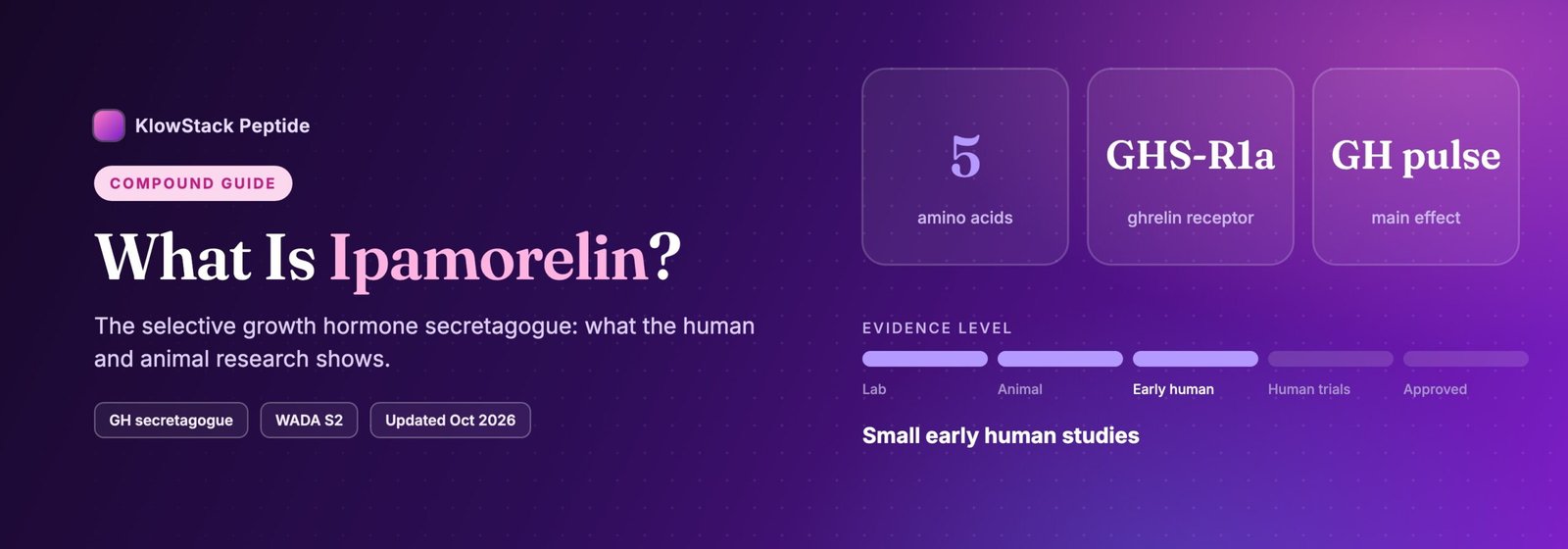
What Is Ipamorelin? The Selective GH Secretagogue Explained
Ipamorelin is a growth hormone secretagogue studied for GH release. See what human and animal research shows, side effects, WADA status and 2026 legality.
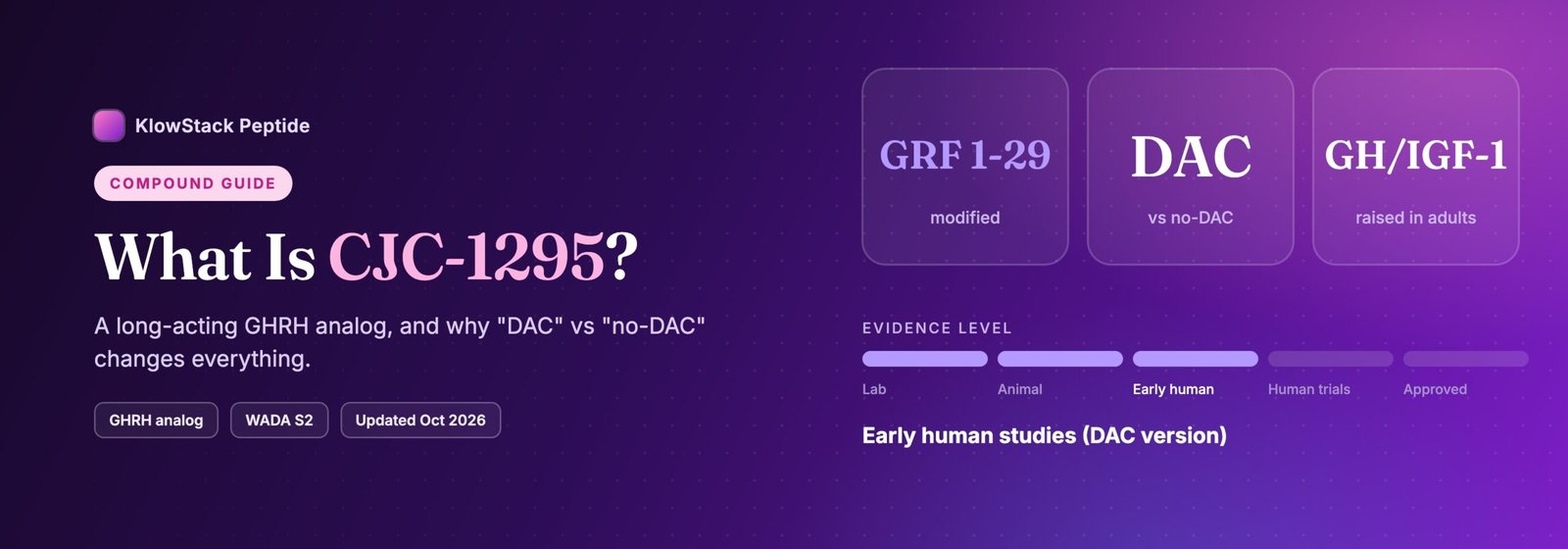
What Is CJC-1295? The Long-Acting GHRH Analog Explained
CJC-1295 is a long-acting GHRH analog studied for growth hormone release. See DAC vs no-DAC, what human studies show, side effects, WADA and 2026 legal status.
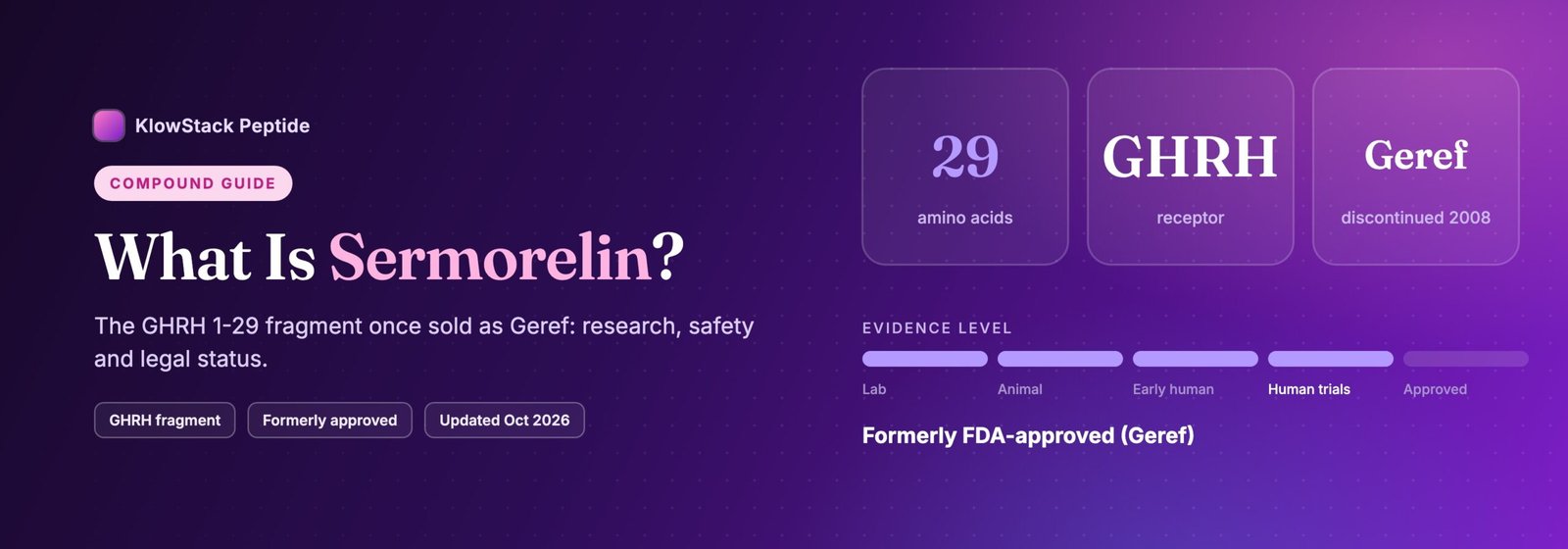
What Is Sermorelin? The Formerly Approved GHRH Peptide Explained
Sermorelin is a GHRH peptide once approved as Geref. See what studies in children and older adults show, side effects, compounding, WADA and 2026 legality.
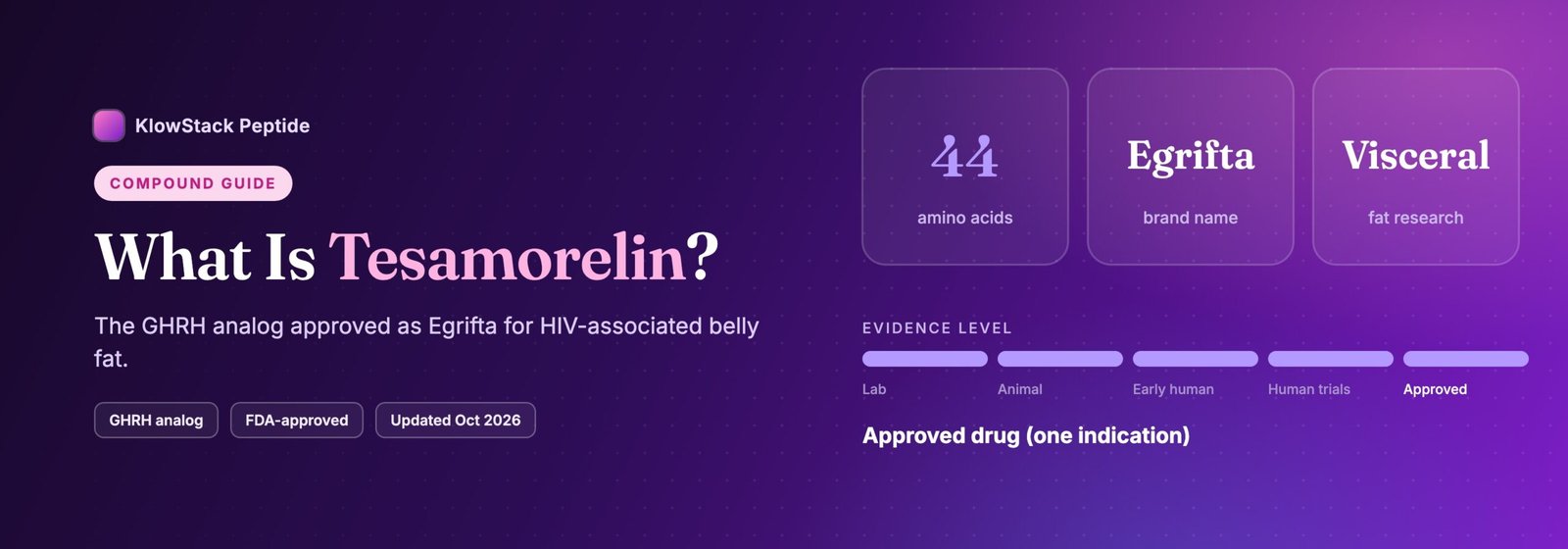
What Is Tesamorelin? The Visceral-Fat GHRH Drug Explained
Tesamorelin is a GHRH drug approved as Egrifta to cut visceral fat in HIV. See what trials show on belly and liver fat, side effects, WADA and legal status.
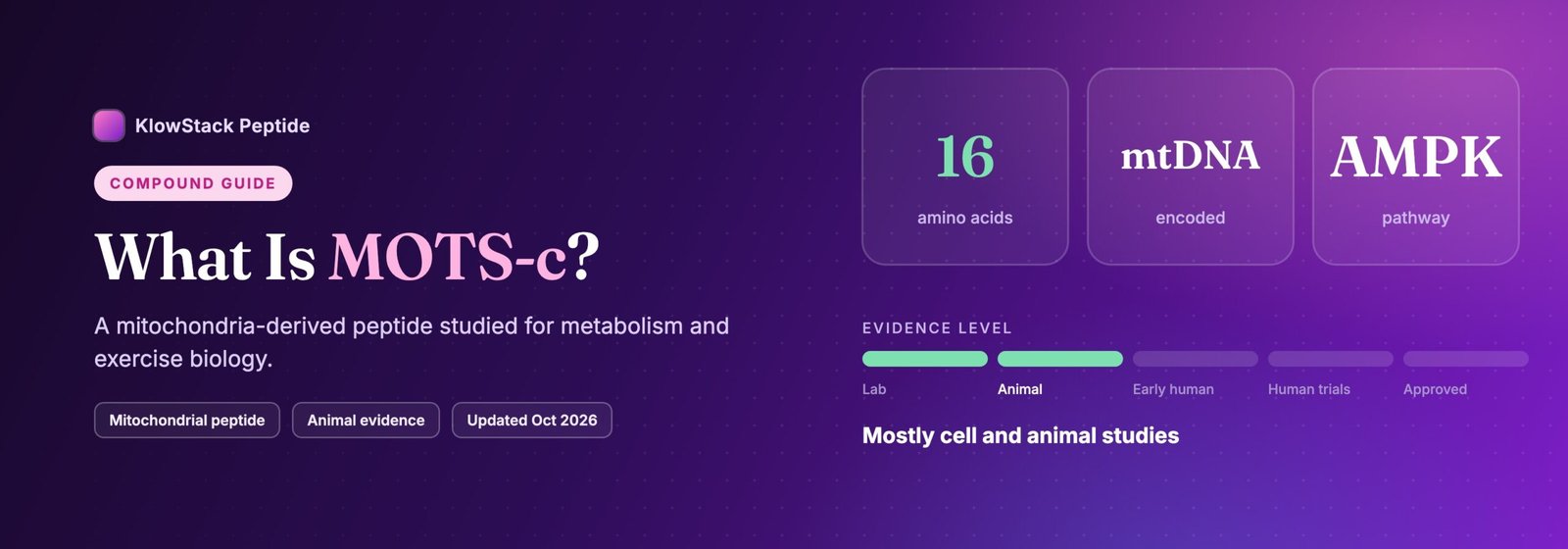
What Is MOTS-c? The Mitochondrial-Derived Peptide Explained
MOTS-c is a mitochondrial-derived peptide studied for insulin resistance and aging. See what mouse and human research shows, side effects, WADA and 2026 status.
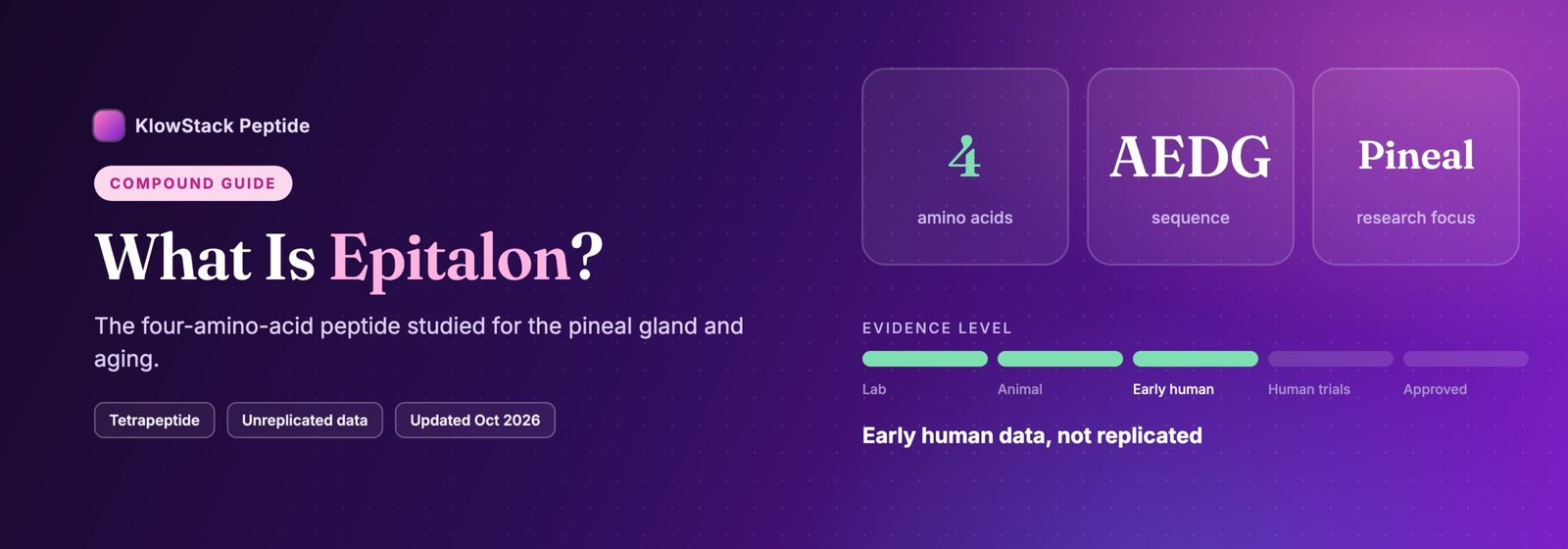
What Is Epitalon? The Pineal Tetrapeptide Explained
Epitalon is a pineal tetrapeptide studied for telomeres, sleep and aging. See what cell, mouse and human studies show, side effects, and 2026 legal status.
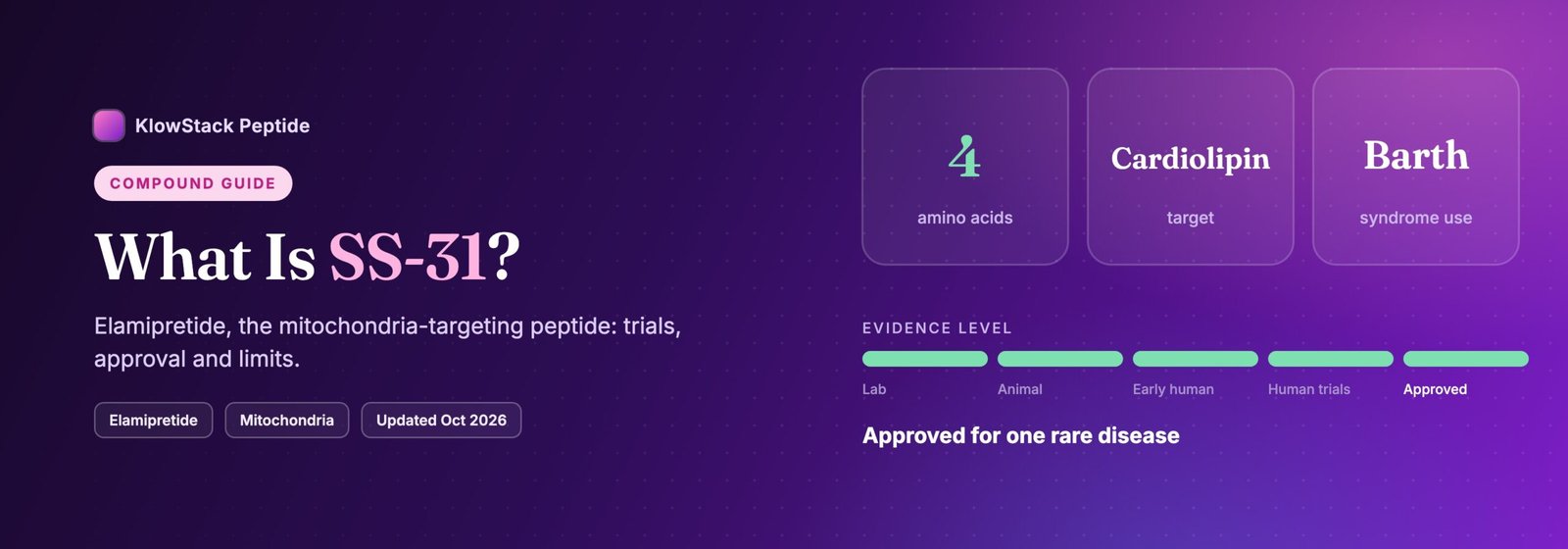
What Is SS-31 (Elamipretide)? The Mitochondria-Targeting Peptide Explained
SS-31 (elamipretide) is a mitochondria-targeting peptide approved as Forzinity for Barth syndrome. See what trials show, side effects and 2026 legal status.
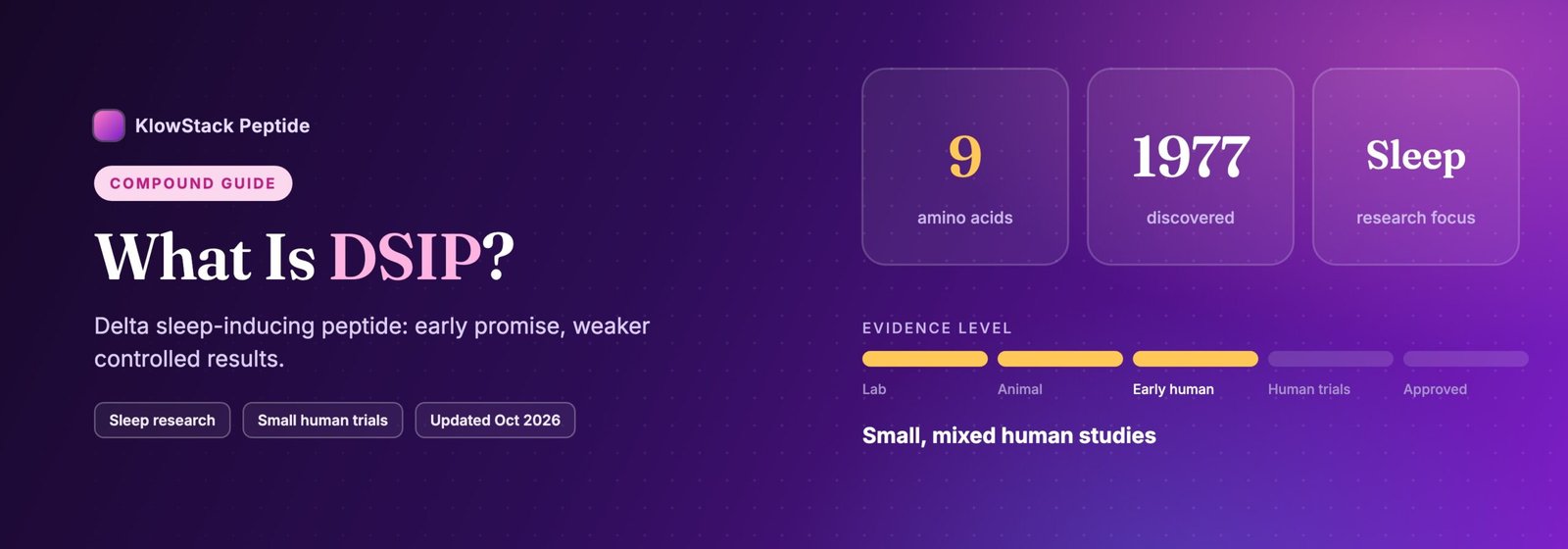
What Is DSIP? The Delta Sleep-Inducing Peptide Explained
DSIP (delta sleep-inducing peptide) is studied for insomnia and deep sleep. See what decades of human studies show, side effects, and why the FDA panel voted no.
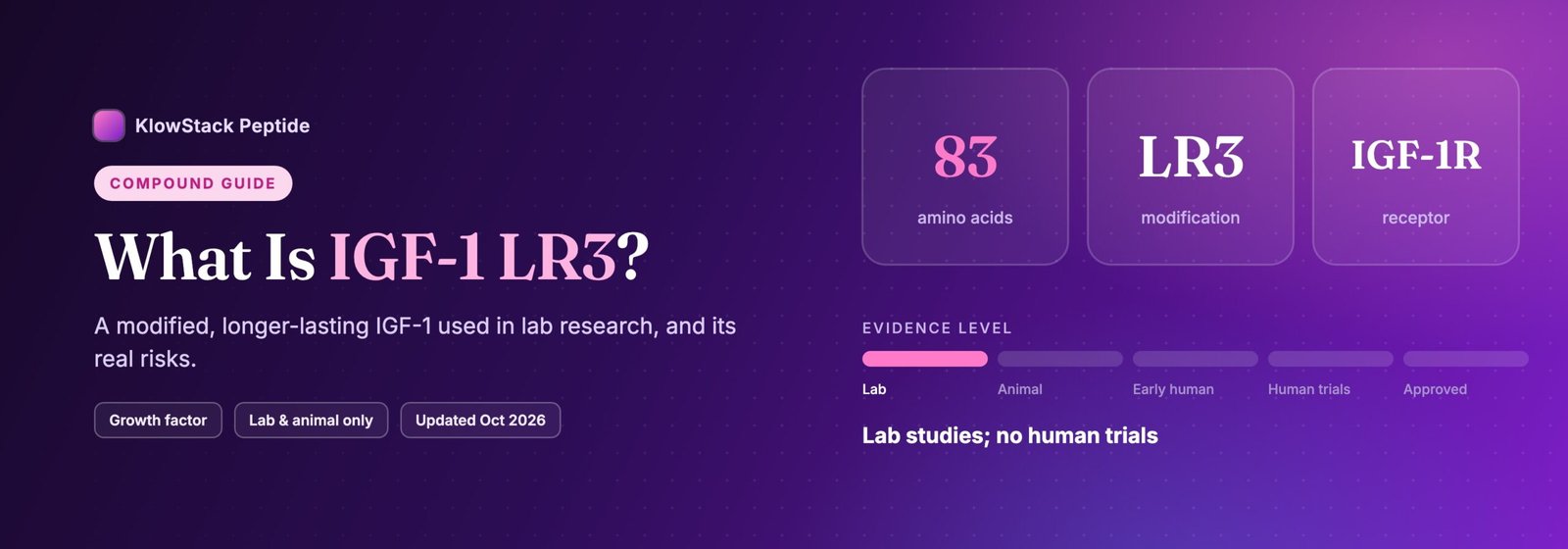
What Is IGF-1 LR3? The Long-Arginine IGF-1 Analog Explained
IGF-1 LR3 is a modified IGF-1 made for cell culture and studied in rats and pigs. See what research shows, the half-life myth, side effects and 2026 legal status.
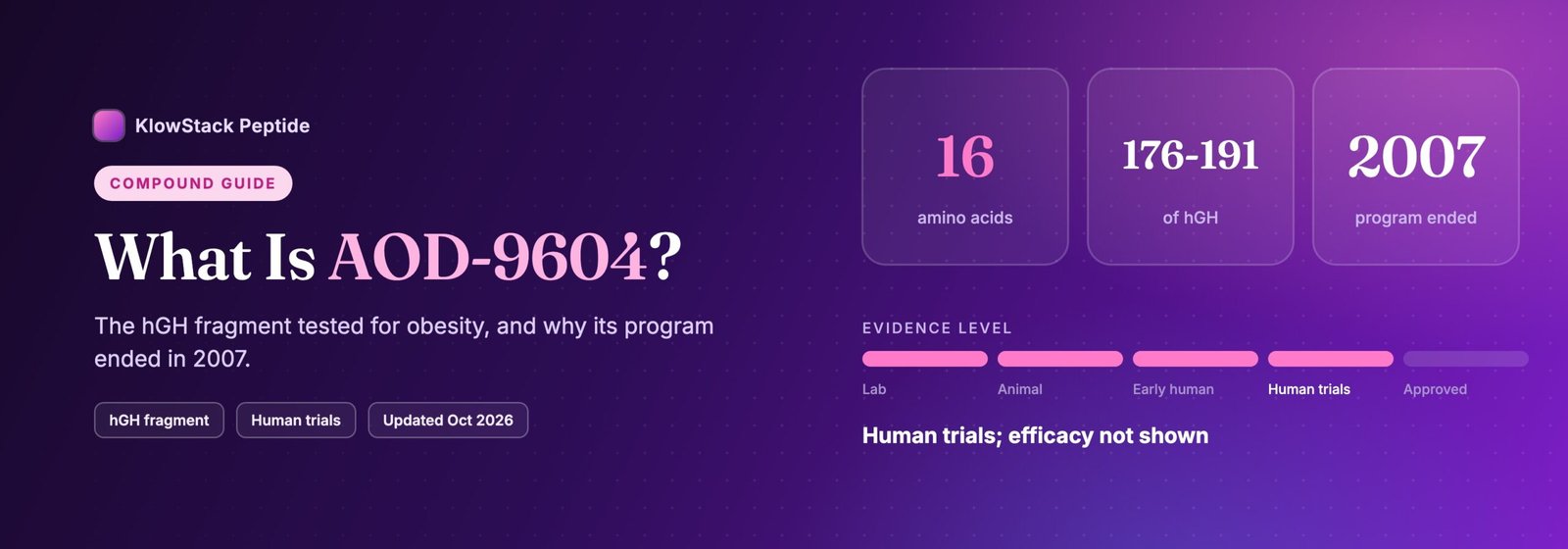
What Is AOD-9604? The Growth Hormone Fragment Explained
AOD-9604 is a growth hormone fragment studied for fat loss. See what human trials showed, why development stopped, side effects, WADA status and 2026 legality.
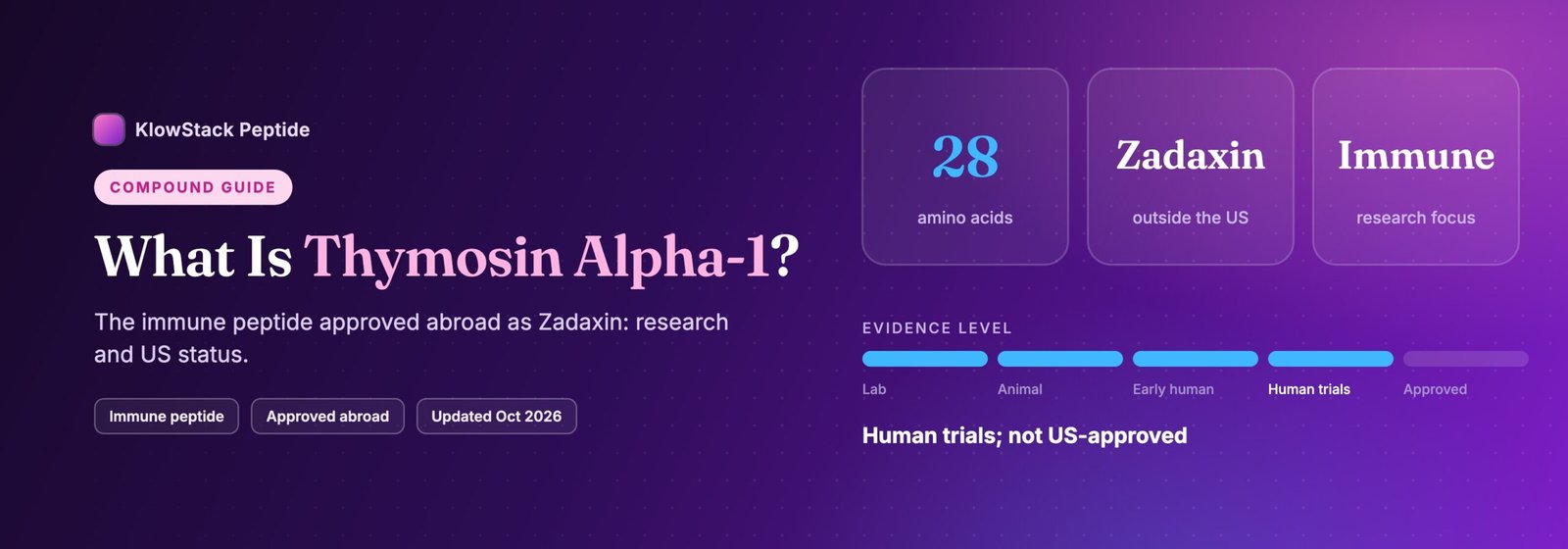
What Is Thymosin Alpha-1? The Immune-Modulating Thymus Peptide Explained
Thymosin alpha-1 is an immune-modulating thymus peptide approved abroad as Zadaxin. See what trials show in hepatitis, sepsis and COVID, safety and 2026 status.
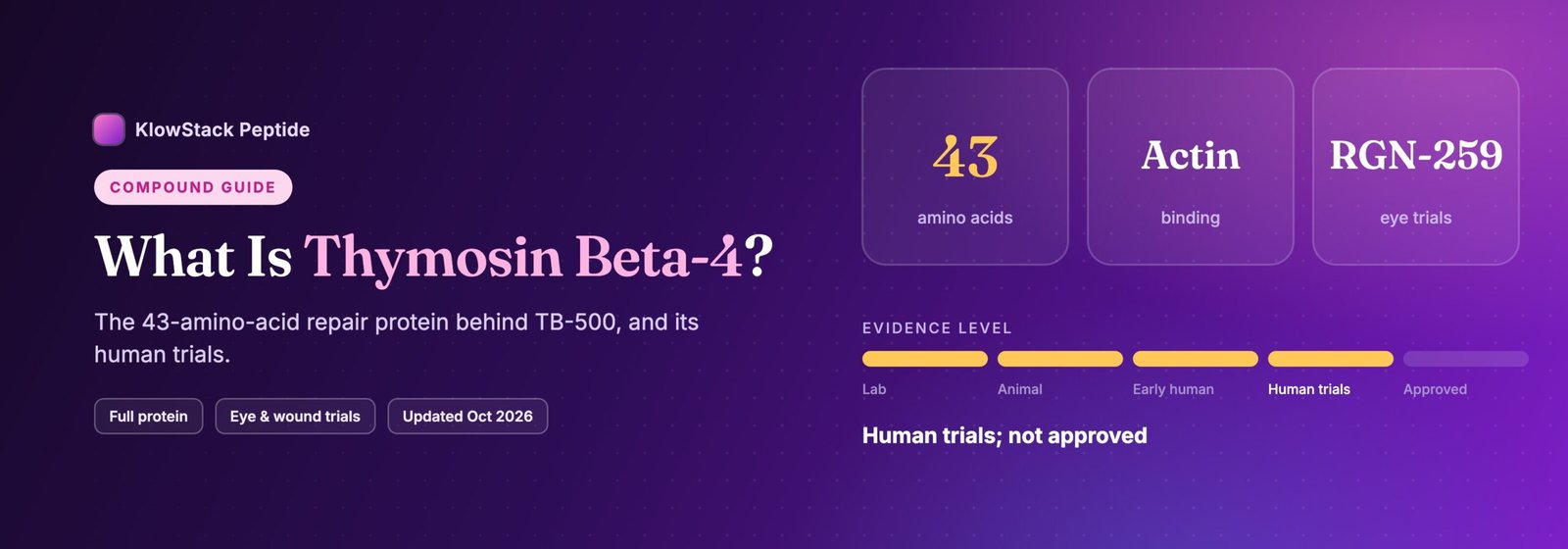
What Is Thymosin Beta-4? The Actin-Binding Repair Protein Explained
Thymosin beta-4 is the 43-amino-acid repair protein behind TB-500. See what eye, wound and heart trials show, side effects, WADA status and 2026 legal status.
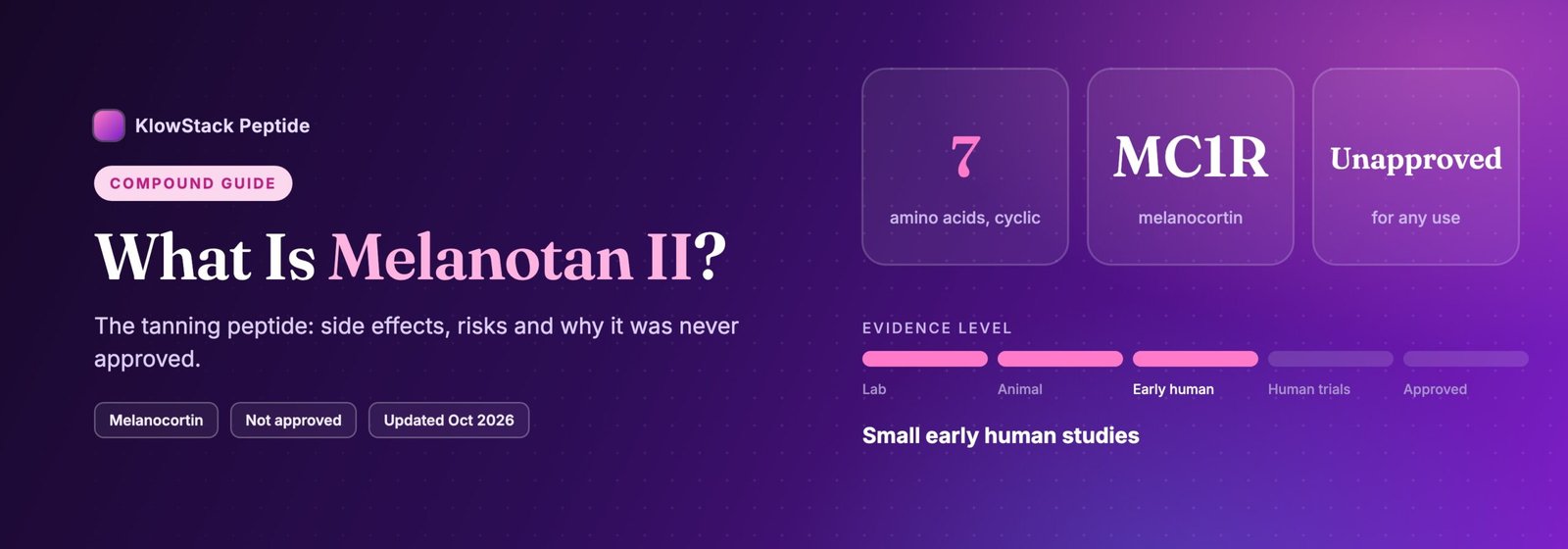
What Is Melanotan II? The Synthetic Tanning Peptide Explained
Melanotan II is a synthetic tanning peptide never approved as a drug. See its three small human studies, documented side effects, mole and melanoma reports and 2026 legal status.
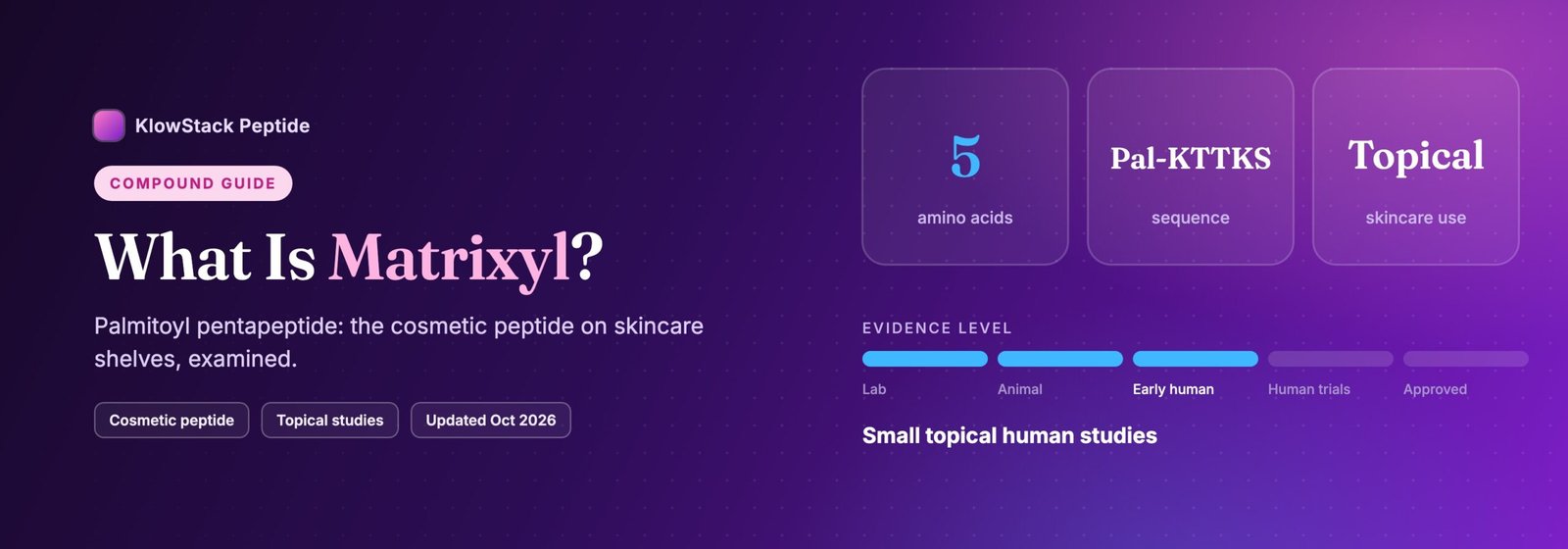
What Is Matrixyl? The Collagen-Signaling Skincare Peptide Explained
Matrixyl (palmitoyl pentapeptide-4) is a collagen-signaling skincare peptide. See what topical trials show, Matrixyl 3000 differences, safety and legal status.
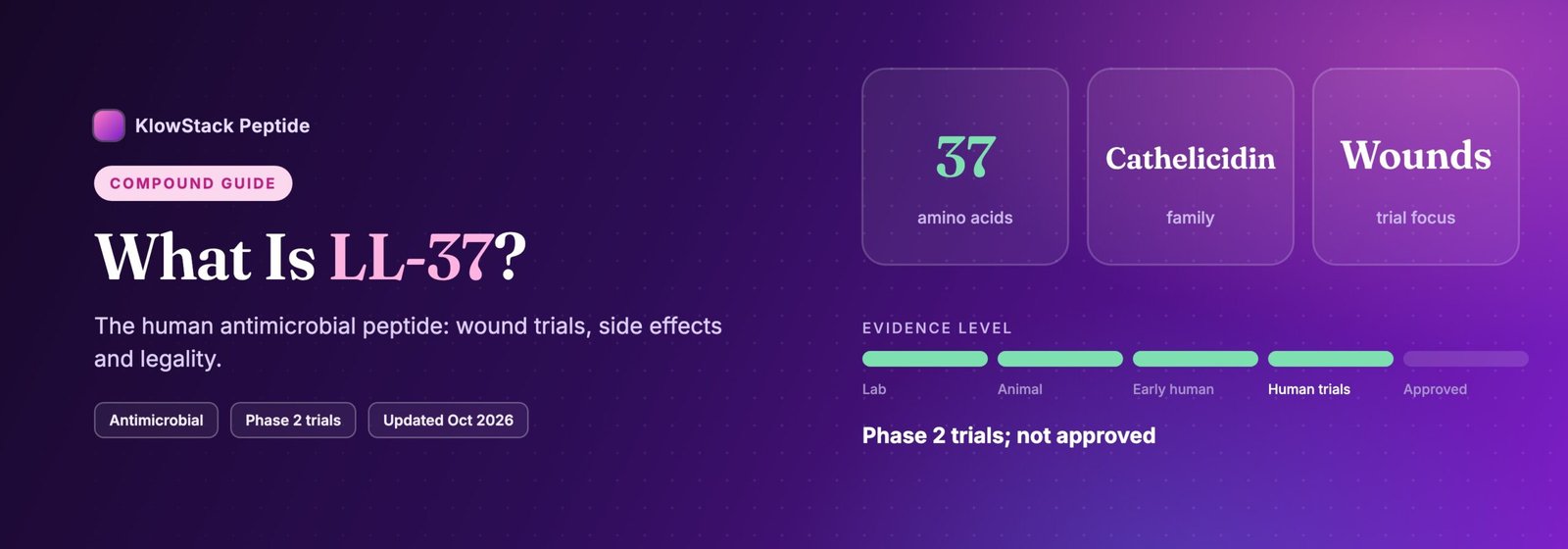
What Is LL-37? The Human Antimicrobial Peptide Explained
LL-37 is the human antimicrobial peptide behind cathelicidin. See what wound and melanoma trials show, its psoriasis and rosacea links, safety and 2026 status.
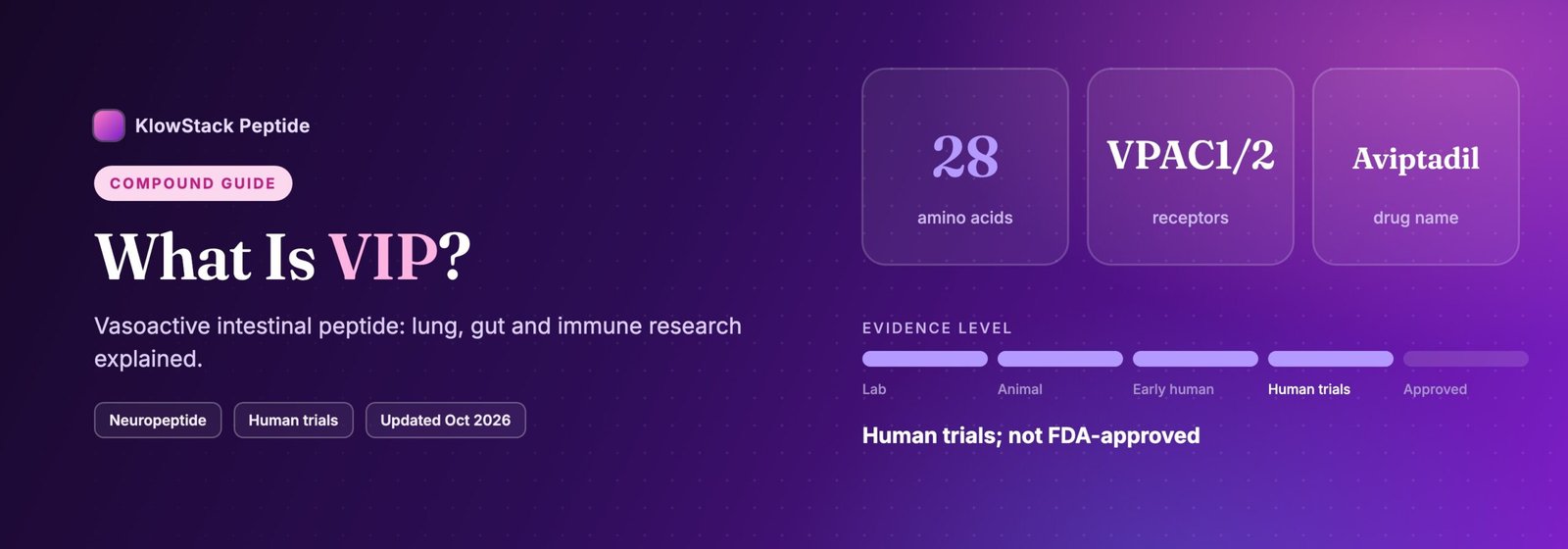
What Is VIP (Vasoactive Intestinal Peptide)? The Gut-Lung Signaling Peptide Explained
VIP (vasoactive intestinal peptide) is a gut-lung signaling peptide tested as aviptadil. See COVID-19, sarcoidosis and lung trials, side effects and FDA Category 1 status.
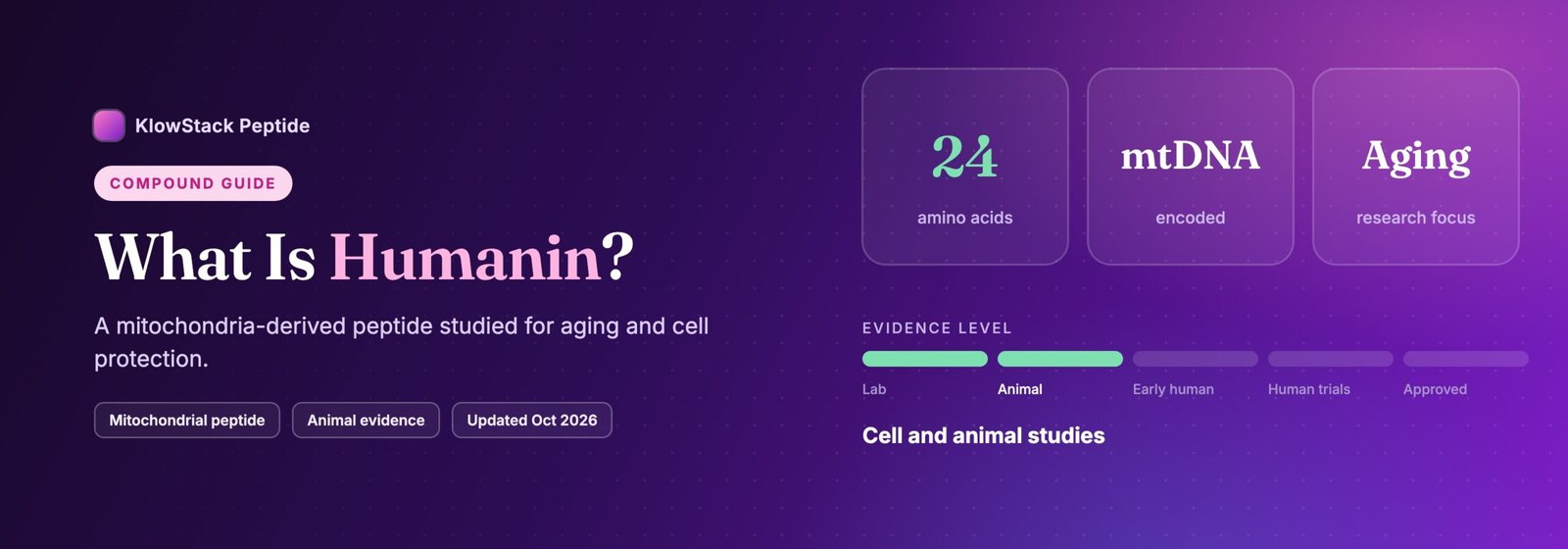
What Is Humanin? The Mitochondrial Survival Peptide Explained
Humanin is a mitochondrial-derived peptide that protects cells in lab and animal studies. See what’s known in people, the cancer caution and 2026 legal status.
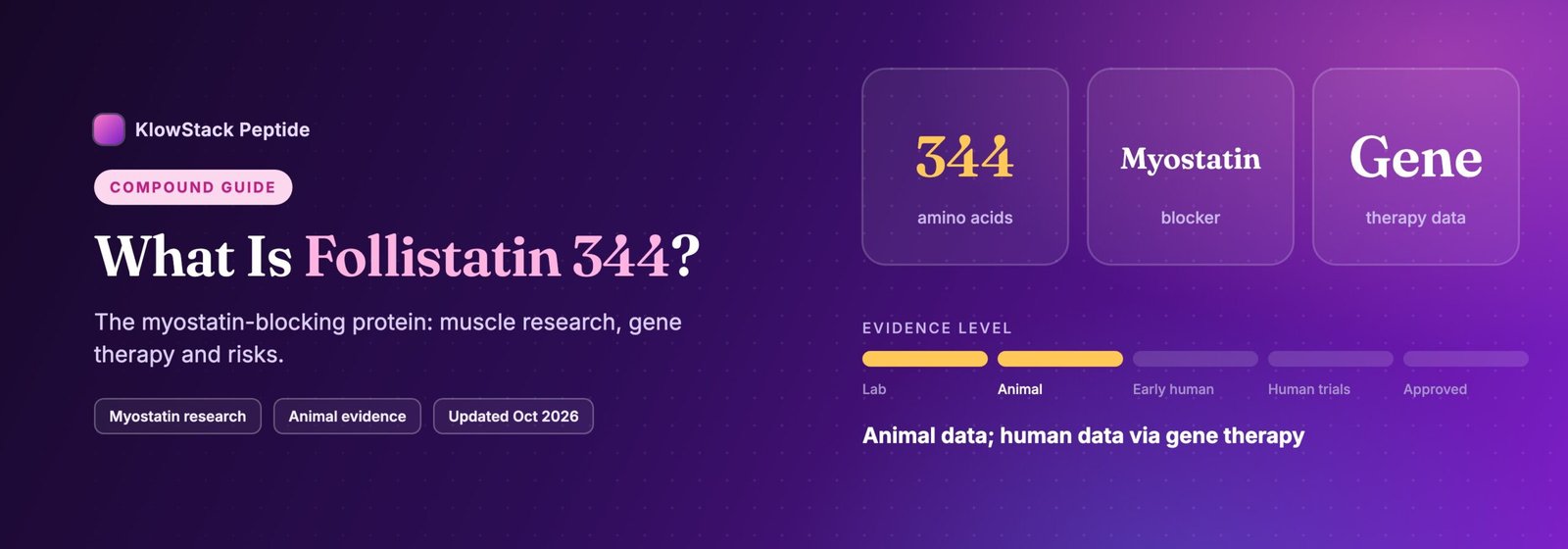
What Is Follistatin 344? The Myostatin-Blocking Protein Explained
Follistatin 344 blocks myostatin, the brake on muscle growth. See what the gene therapy trials found, why injected protein is untested, safety and WADA status.
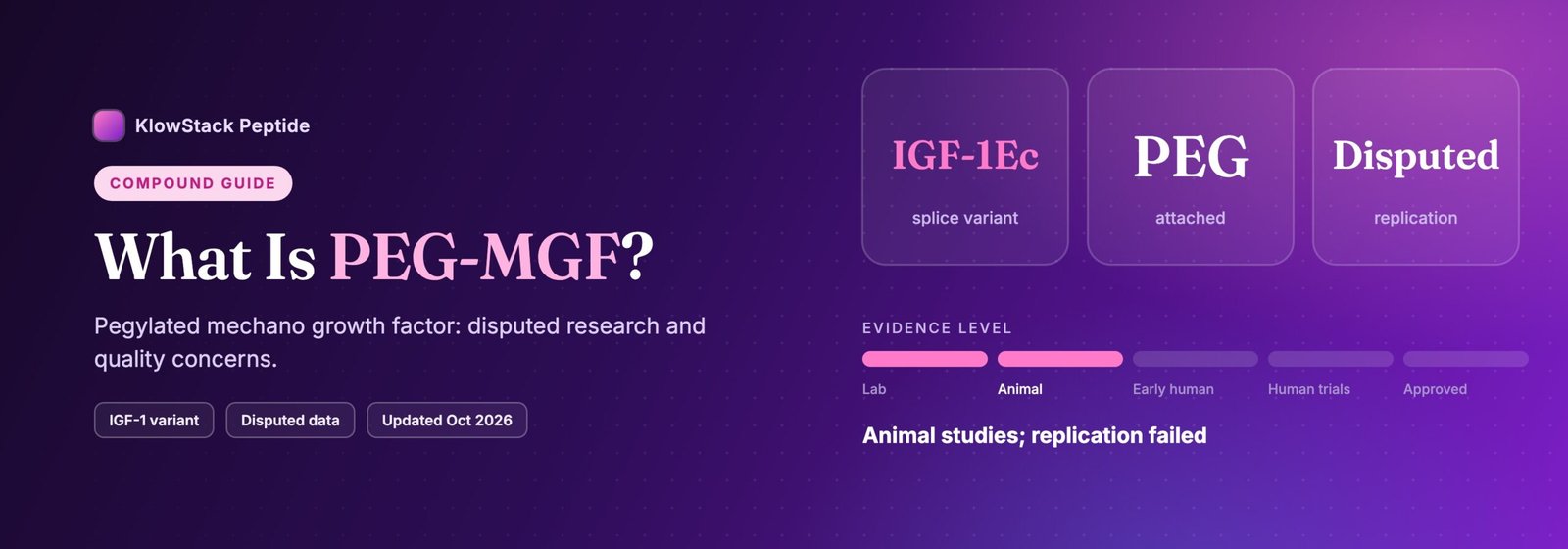
What Is PEG-MGF? The Pegylated IGF-1 Splice Variant Explained
PEG-MGF is a pegylated mechano growth factor peptide from IGF-1. See why its key finding failed to replicate, what animal studies show, safety and WADA status.
Compound Research Deep Dives
Focused reviews of one research area at a time, with every finding labelled by study type.
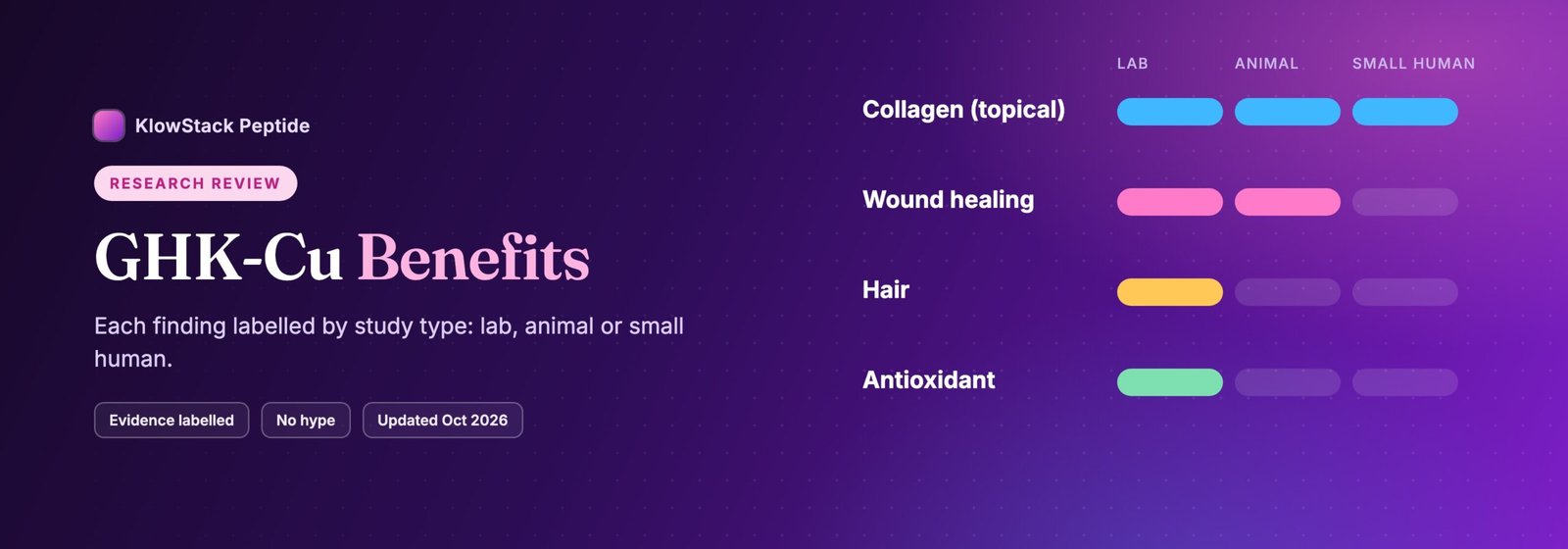
GHK-Cu Benefits: What the Research Shows
What does research say about GHK-Cu? A study-by-study look at collagen, wound healing, hair and antioxidant findings, labelled by evidence type.
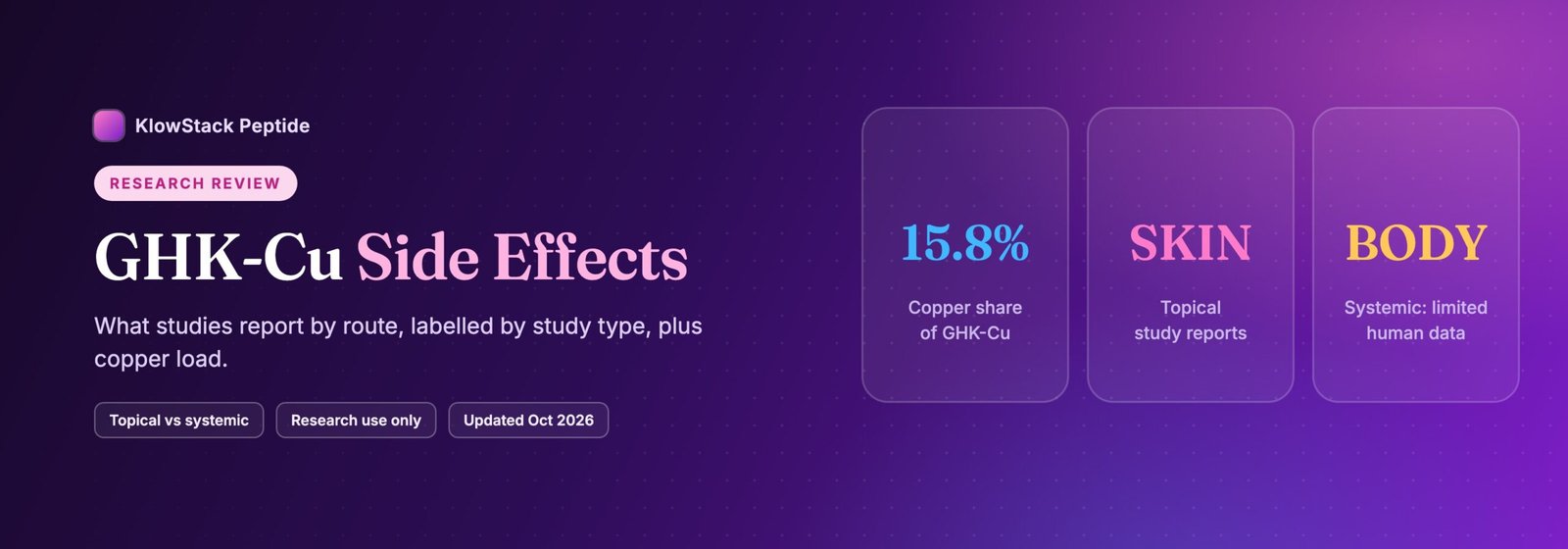
GHK-Cu Side Effects: What Research Reports by Route and Study Type
What side effects have GHK-Cu studies reported? Findings sorted by topical vs systemic route and labelled by study type, plus copper load and purity.
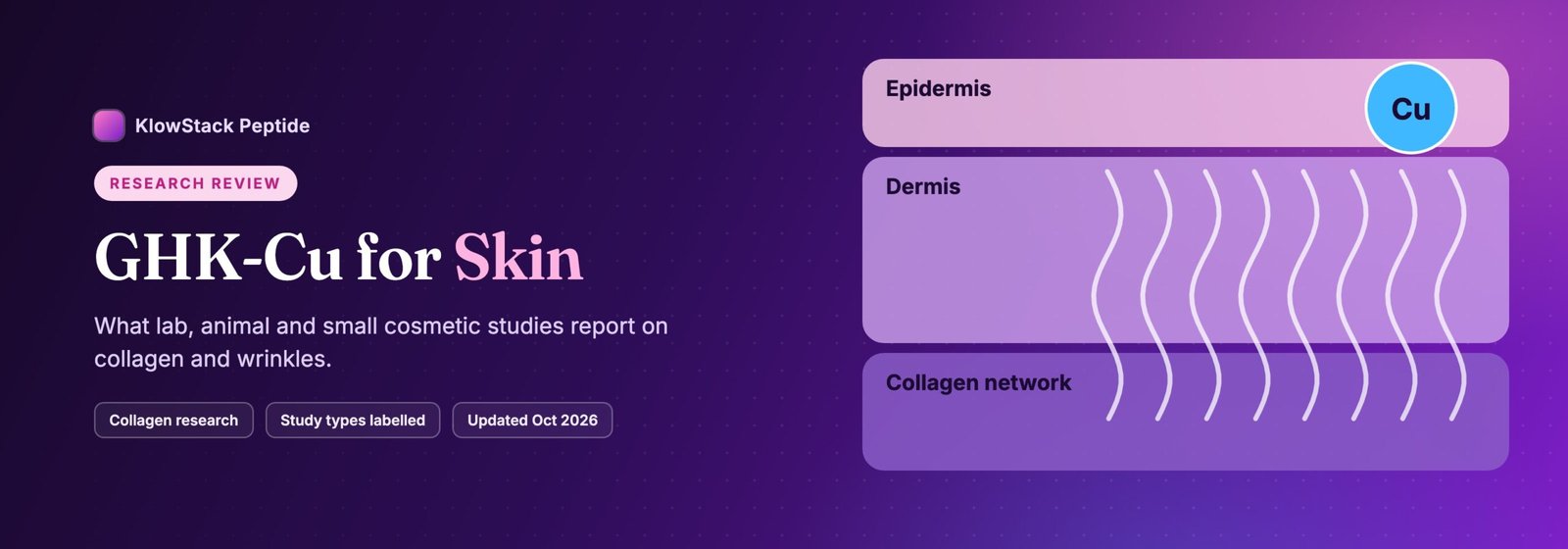
GHK-Cu and Skin: What Collagen and Wrinkle Research Reports
What lab, animal and small human studies report about GHK-Cu, collagen and wrinkles, with study types, limits and research-use status explained.
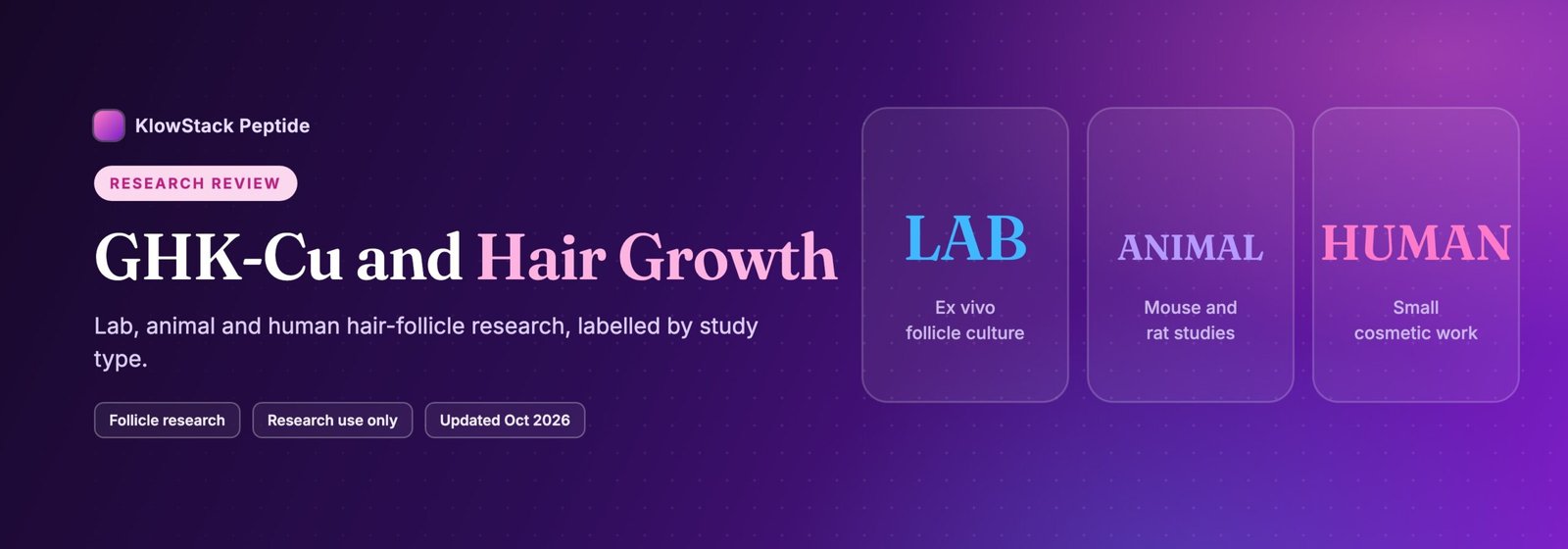
GHK-Cu and Hair Growth: What Studies Show
What do lab, animal and human studies say about GHK-Cu and hair follicles? A study table by evidence type, and the claims that don’t check out.
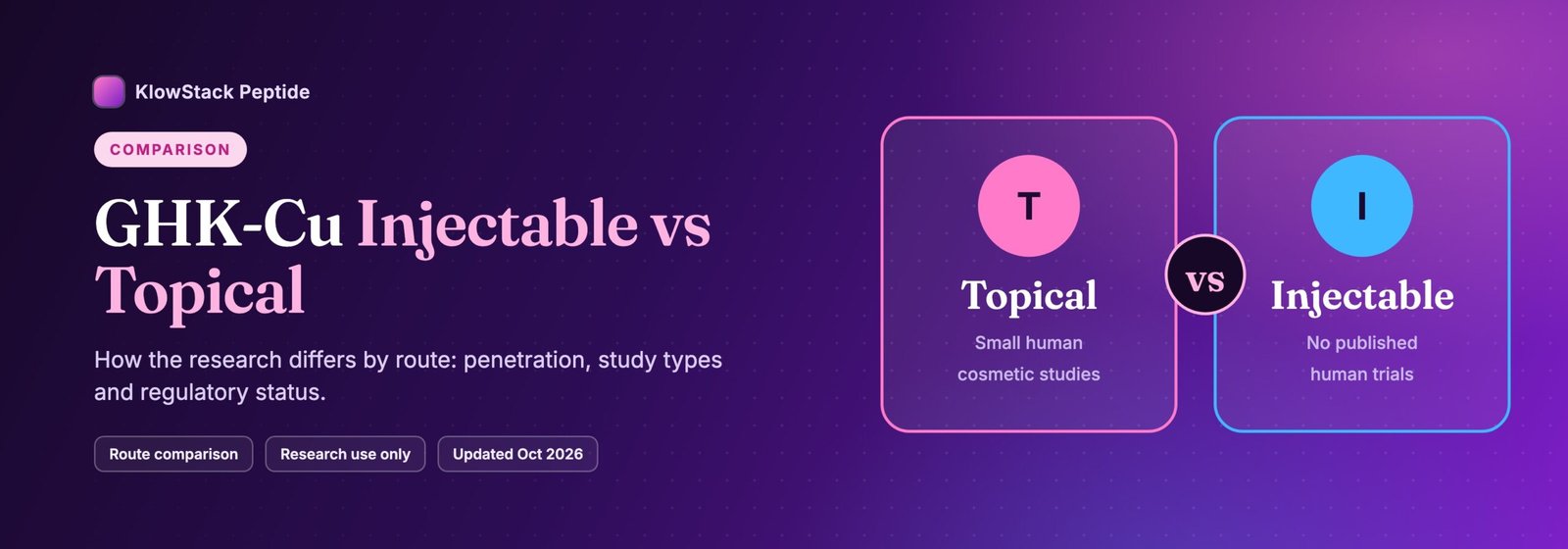
GHK-Cu Injectable vs Topical: How the Research Differs by Route
GHK-Cu injectable vs topical serum and cream, compared by route: skin penetration, study types and regulatory status. Research use only, not for humans.
KPV Benefits: What the Research Shows (and What It Doesn’t)
KPV peptide research findings sorted by study type: gut, skin, immune and wound models, plus what is still untested in humans. Research use only.
KPV Side Effects: What the Research Reports (and What Is Still Unknown)
KPV peptide side effects and safety data sorted by study type: what cell and mouse studies report, what is untested in humans, and regulatory status.
KPV in Gut & IBD Research: What Colitis Studies Show
What lab and animal studies show about KPV in gut inflammation and colitis models: mechanisms, delivery research and evidence limits. Research use only.
BPC-157 Benefits: What the Research Actually Shows
What animal, lab and early human studies report about BPC-157: tendon, gut and tissue research, how strong the evidence is, and its limits. Research use only.
BPC-157 Side Effects and Safety: What the Research Shows
What animal, lab and limited human studies report about BPC-157 side effects and risks, what’s still unknown, and its FDA and WADA status. Research use only.
BPC-157 and the Gut: What Animal and Lab Research Shows
BPC-157 gut research by study type: ulcer, colitis, fistula and gut-barrier models in rats, plus what is untested in humans for IBS or leaky gut.
BPC-157 for Tendon & Joint Research: What the Studies Show
BPC-157 tendon, ligament and joint research sorted by study type: rat tendon models, cell studies and the few small human reports. Research use only.